
Services
About
Service Areas


Are heat pumps efficient in hot dry climates like California's Central Valley or greater Sacramento area? Yes — and the data backs it up strongly. Here's a fast breakdown before we dive deeper:
• Do heat pumps cool effectively in dry heat? — Short Answer: Yes — they work the same as traditional AC, often with higher efficiency
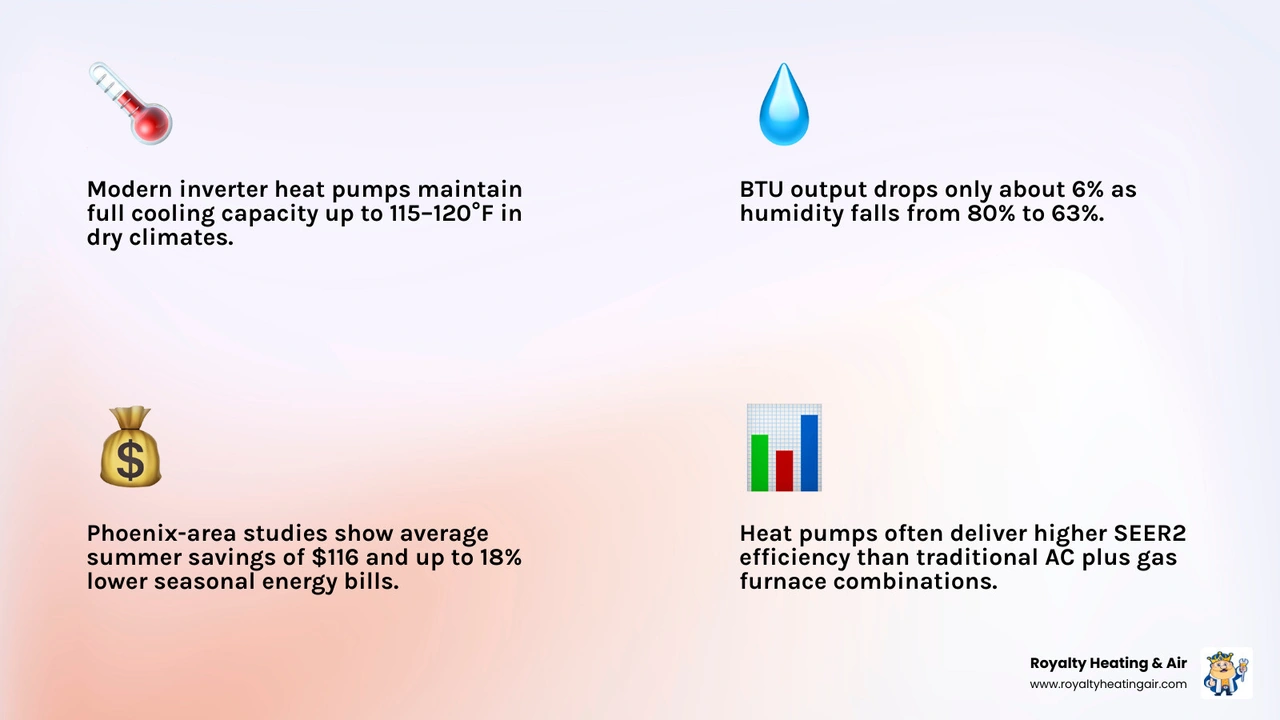
• Does low humidity hurt performance? — Short Answer: Minimally — BTU output drops only ~6% as humidity falls from 80% to 63%
• Can they handle 110°F+ heat waves? — Short Answer: Yes — modern inverter-driven units maintain full capacity up to 115–120°F
• Are they better than AC + gas furnace in arid regions? — Short Answer: In most cases, yes — higher SEER2 ratings and dual function in one unit
• How much can homeowners save? — Short Answer: Phoenix-area studies show average summer savings of $116, with some families saving up to 18% on seasonal energy bills
If you live in Roseville or anywhere in the Sacramento Valley, your climate is actually one of the better environments for heat pump technology. Hot summers, mild winters, and low humidity create conditions where modern heat pumps can shine — yet many homeowners still hesitate because of outdated assumptions about how this equipment performs in dry desert-like heat.
Research involving more than 8,000 households in hot, dry regions found that heat pump users were able to start cooling their homes earlier in the season without the dreaded spike in energy bills that typically comes with running traditional air conditioning. That kind of real-world result matters when you're facing a Sacramento Valley summer.
The concern that extreme dry heat makes heat pumps ineffective is largely rooted in how older, lower-grade equipment behaved — not how today's systems perform. Modern variable-speed heat pumps are engineered specifically to handle the conditions you experience right here in Roseville and the surrounding foothills.
When we talk about keeping comfortable in Northern California, we are dealing with a distinct climate profile. Unlike the humid, sticky heat of the East Coast or the South, our summers in places like Roseville and Rocklin are hot but incredibly dry.
This brings us to a crucial question: are heat pumps efficient in hot dry climates?
To understand why they are, we have to look at how an air conditioner or a heat pump actually cools your home. A heat pump doesn't "create" cold air; it extracts heat from inside your house and transfers it outdoors. In high-humidity climates, an HVAC system must spend a massive amount of its energy on "latent cooling"—which is the process of condensing water vapor out of the air to lower the humidity.
In our dry climate, however, we benefit from the "Arid Advantage." Because our relative humidity is already low, a heat pump can focus almost 100% of its operational energy on "sensible cooling"—which is the direct lowering of the actual air temperature. This makes the cooling process incredibly fast and highly efficient.
Furthermore, dry air is actually excellent for heat pump longevity. Because our outdoor coils stay cleaner and are less prone to the constant moisture and acidic condensation found in humid coastal states, the physical components of your system experience far less corrosion over time. If you want to dive deeper into how these systems function in our specific region, check out our comprehensive Heat Pump Guide Roseville CA.
One of the most persistent myths we hear is that heat pumps require moisture or humidity in the air to transfer heat effectively. This is completely false.
Heat pumps rely strictly on the temperature difference between the outdoor air and the chemical refrigerant circulating through the system's copper coils. Refrigerant is incredibly cold when it passes through the indoor coil, absorbing heat from your home's air. When it is pumped outside, the compressor pressurizes the refrigerant, making it hotter than the outdoor air. This temperature differential allows the heat to naturally escape into the atmosphere, even if it is 100°F outside.
Some laboratory data suggests that a heat pump's BTU output may drop by about 6% when relative humidity falls from 80% to 63%. While that sounds like a drawback on paper, in real-world applications, the lack of a heavy latent load (humidity) more than compensates for this minor drop. Because the system does not have to work hard to squeeze gallons of water out of your indoor air, high-efficiency motors still keep the overall energy draw much lower than standard, older air conditioners.
In fact, modern heat pumps achieve an outstanding Coefficient of Performance (COP) of 3.0 to 7.0. This means that for every single unit of electricity you put into the system, you get three to seven units of heat moved. Try getting those efficiency numbers out of any traditional combustion system! For homeowners looking to upgrade, exploring a professional Heat Pump Replacement Roseville CA is a highly effective way to slash summer energy bills.
It is one thing for a system to run efficiently on a pleasant 85°F May afternoon in 2026, but how do modern heat pumps perform when we hit those brutal, triple-digit July heat waves where temperatures climb past 110°F?
Historically, older single-stage heat pumps did struggle in extreme heat. In extreme temperatures, older budget-grade units can lose 10% to 30% of their cooling capacity once the mercury passes 110°F. This capacity loss occurred because their single-speed compressors could not pump refrigerant fast enough to reject heat against such a high outdoor temperature gradient.
Today, the game has completely changed thanks to variable-speed or inverter-driven compressors. Instead of operating like a light switch (either 100% on or completely off), an inverter-driven compressor operates like a dimmer switch. It can scale its output anywhere from 25% to 100% in tiny increments.
When a heat wave hits Rocklin or Lincoln, a variable-speed system doesn't panic. It ramps up to the exact capacity needed to maintain your indoor comfort. Because it runs continuously at lower, highly efficient speeds rather than constantly cycling on and off, it maintains excellent voltage stability and consumes far less power. Modern premium systems are engineered to maintain full cooling capacity up to 115°F or 120°F, ensuring your home stays a cool 72°F even when the asphalt outside is practically melting. If you are ready to transition to this technology, we recommend looking into a Heat Pump Installation Rocklin CA.
To truly evaluate if are heat pumps efficient in hot dry climates, we must compare them side-by-side with the traditional setup: a standard central air conditioner paired with a natural gas furnace.
• Cooling Efficiency (SEER2) — Modern Inverter Heat Pump: Up to 24–30 SEER2 — Traditional AC + Gas Furnace: Typically 14–18 SEER2
• High-Heat Efficiency (EER2) — Modern Inverter Heat Pump: Excellent (optimized for 95°F+) — Traditional AC + Gas Furnace: Moderate to Poor
• Heating Efficiency (COP / AFUE) — Modern Inverter Heat Pump: 3.0–7.0 COP (300%–700% efficient) — Traditional AC + Gas Furnace: 80%–96% AFUE gas combustion
• Equipment Footprint — Modern Inverter Heat Pump: Single outdoor unit + indoor air handler — Traditional AC + Gas Furnace: Outdoor AC condenser + indoor furnace
• Source of Heating — Modern Inverter Heat Pump: Electrical heat transfer — Traditional AC + Gas Furnace: Fossil fuel combustion
• Lifespan in Dry Climates — Modern Inverter Heat Pump: 18–22 years (with proper maintenance) — Traditional AC + Gas Furnace: 15–20 years
In our dry, cooling-dominated climate, a traditional gas furnace is often massive overkill. We experience hot, long summers and relatively short, mild winters. Installing a large gas furnace that only runs a few months out of the year means you are paying high upfront costs for a heating system you barely use.
A heat pump replaces both systems with a single, highly efficient unit. In the summer, it functions as a world-class air conditioner. In the winter, it simply reverses its cycle to pull residual warmth from the outdoor air and move it indoors. To learn more about how this balance works in local homes, read our Heat Pump Replacement Lincoln CA Guide.
In places like Granite Bay, we often experience dramatic daily temperature swings—sometimes dropping 20 to 30 degrees from a scorching afternoon to a crisp, cool night. This is where variable-speed and inverter-driven heat pumps show their true brilliance.
Traditional single-stage air conditioners are designed for "worst-case scenario" peak temperatures. When they run during milder morning or evening hours, they rapidly overcool the home, shut off, and then turn back on a few minutes later. This "short-cycling" is incredibly hard on the compressor, wastes massive amounts of electricity, and leads to uneven temperatures throughout your home.
Inverter technology eliminates this problem. By matching the cooling output precisely to the real-time heat load of your home, an inverter system can idle down to a low-energy sip once your thermostat setting is reached. This constant, gentle airflow keeps the indoor temperature incredibly stable, prevents hot spots upstairs, and keeps your energy usage remarkably low. If you want to maximize your home's efficiency and comfort, a Heat Pump Replacement Granite Bay CA featuring variable-speed technology is the gold standard.
While summers get all the attention, winter nights in our region can get surprisingly chilly, often dipping into the 40s and high 30s.
Because a heat pump relies on a temperature difference between the outdoor air and the refrigerant to absorb heat, some homeowners worry that cold winter nights will cause the system to struggle. It is true that a heat pump's heating capacity and efficiency (COP) both drop as the outdoor air gets colder.
However, because our local winter temperatures rarely drop below freezing for extended periods, we remain in the absolute "sweet spot" for heat pump heating. The system does not have to work hard to find ambient heat in 45°F air. Instead of generating a dry, scorching blast of air like a traditional gas furnace, a heat pump delivers a steady, consistent, and comfortable warmth. It does all of this while operating at 300% to 500% efficiency compared to the 80% to 96% limit of a gas furnace. For those living in the foothills, a Heat Pump Replacement Auburn CA provides the perfect balance of winter warmth and summer cooling.
While heat pumps are incredibly efficient, our hot, dry climate presents one major environmental hazard: airborne dust and debris.
In dry climates, dust, dry soil, and pollen easily become airborne and settle on your outdoor unit's aluminum fins. Over time, this layer of dirt acts as an insulator, trapping heat inside the system and preventing the refrigerant from releasing heat efficiently. This forces your compressor to work much harder, drastically reducing efficiency, increasing your energy bills, and potentially leading to premature motor burnout.
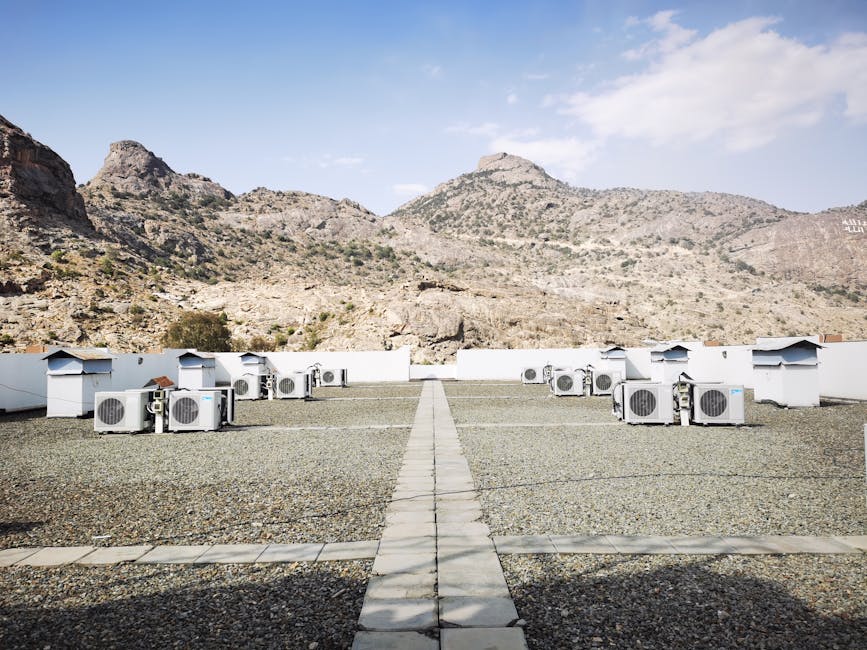
To keep your system running at peak performance, use this dry-climate maintenance checklist:
• Change Filters Monthly: In dusty dry environments, standard air filters clog much faster than the manufacturer-recommended three months. Check your filter monthly during peak summer and winter seasons.
• Keep a 2-Foot Clearance: Ensure dry weeds, shrubs, and dirt piles are cleared at least two feet around your outdoor unit to maximize airflow.
• Wash the Outdoor Coils: Gently spray down your outdoor unit's coils with a garden hose (never use a high-pressure washer, which can bend the delicate aluminum fins) to wash away accumulated dust.
• Schedule Professional Tune-Ups: Have a professional technician perform a deep coil cleaning and check refrigerant pressures twice a year (spring and fall).
• Inspect Fan Blades: Ensure the outdoor fan is free of debris and dust buildup, which can unbalance the blades and damage the motor.
Regular upkeep is the absolute key to protecting your investment. If your current system is older and struggling to keep up with the dust and heat, scheduling a Heat Pump Replacement Loomis CA can restore your peace of mind and slash your monthly utility costs.
Yes, absolutely. Modern premium heat pumps are fully rated to operate in extreme temperatures up to 120°F or even 125°F. However, proper sizing is critical. If a system is undersized, it will run constantly during a heat wave and may struggle to keep up.
In extreme heat, some budget-grade or older variable-capacity units may automatically reduce their capacity (derate) or temporarily shut down to prevent hardware damage from thermal stress. Investing in a high-quality system with a strong EER2 rating ensures your unit can handle these peak-demand days. To learn about selecting the right unit for your home, read our Heat Pump Replacement Rocklin Guide.
Technically, very low humidity can cause a minor drop of about 6% in overall BTU output because there is less moisture in the air to transfer latent heat. However, this is actually a benefit for your comfort.
Because the heat pump does not have to waste energy dehumidifying the air, it focuses entirely on lowering the actual temperature (sensible cooling). Your home will actually feel cooler faster, and you won't have to deal with the clammy, sticky feeling common in humid regions. To keep your indoor air from feeling too dry, you can easily pair your heat pump with a whole-home humidifier to maintain a perfect 30% to 50% indoor humidity level. If you are looking for cost-effective options, check out our Affordable Heat Pump Rocklin Guide.
The savings can be substantial. Extensive research in hot-dry Southwest climates like Phoenix has shown that homeowners save an average of $116 per summer season compared to older, traditional cooling systems. For low-income families and those transitioning from older, inefficient standard air conditioners, seasonal energy bill reductions reached up to 18%.
When you factor in the massive efficiency gains during our mild winters—where a heat pump easily outperforms gas or standard electric heating—many local homeowners see overall utility bill savings of upwards of $1,000 per year. Over a typical 15-to-20-year lifespan, a heat pump easily pays for itself. For an in-depth look at local performance expectations, check out our Professional Heat Pump Guide Roseville CA.
At the end of the day, the verdict is clear: are heat pumps efficient in hot dry climates? Not only are they efficient, but our dry Northern California climate is actually one of the absolute best environments for this technology. By capitalizing on the "Arid Advantage," modern variable-speed heat pumps deliver unmatched cooling comfort in the summer and highly efficient, cozy warmth in the winter—all from a single, dependable system.
When you choose Royalty Heating & Air for your home comfort needs, you aren't just getting expert HVAC installation, maintenance, and repairs from qualified local technicians. You are also partnering with a company that cares deeply about our community. Through our unique partnership with the MackAttack Foundation, we proudly support foster babies and sponsor family adoptions right here in Roseville, Rocklin, Lincoln, Loomis, and Granite Bay.
We believe that every family deserves a comfortable, safe, and happy home. If you are ready to upgrade your efficiency, lower your utility bills, and experience the ultimate in year-round indoor comfort, Schedule your Sacramento area heat pump consultation today and let us show you the Royalty difference!
