
Services
About
Service Areas


Understanding exactly how a dirty flame sensor causes your furnace to blow cold air is the fastest way to turn a frustrating morning into a simple fix. That strange noise from your furnace kicking on during the early fall / September first-heat test is usually a welcome sound, right up until you feel a freezing breeze coming from your vents. It is incredibly common for homeowners to wake up on that first chilly morning, turn on the thermostat, and wait for warmth, only to find the system blowing cold air instead.
When this happens, the immediate reaction is often panic. Most people assume the entire heater is broken, the motor has failed, or the system requires a catastrophic, expensive replacement. However, the reality is usually much less severe. In many cases, the true culprit is a microscopic layer of dust sitting on a single, highly critical component: the flame sensor.
This tiny metal rod dictates whether your system produces heat or shuts down entirely. Because it is so sensitive, addressing this issue requires professional insight rather than guesswork. Relying on experts who understand the intricacies of heating systems ensures that the root cause is identified quickly. By prioritizing routine preventative maintenance before the cold weather sets in permanently, you can eliminate this September surprise and keep your home consistently warm.
To understand why your system is acting up, you first need to know what a flame sensor actually is. Located near the burner assembly inside your furnace, the flame sensor is a delicate metallic rod, usually bent at a slight angle and mounted on a porcelain or ceramic insulator. It sits directly in the path of the gas burners. While it might look like a simple piece of metal, it is actually a highly sensitive safety device designed to protect your home in Roseville CA from dangerous gas leaks.
The sensor is not a basic on/off switch. It is a precision electrical instrument that operates using a microampere direct current. To put that into perspective, a microamp is one-millionth of an amp. The sensor uses this incredibly small electrical charge to detect the presence of a live, burning flame.
When the furnace ignites, the flames engulf the metal rod. Fire itself contains ionized gases, which means the flame can actually conduct electricity. The furnace sends a tiny electrical voltage to the sensor rod. If a flame is present, the electrical current travels through the fire to the metal chassis of the furnace, completing the circuit. This process is known as flame rectification. As long as the current remains above a specific threshold (typically around 0.5 to 10 microamps), the system knows the fire is burning safely.
The main control board is the brain of your furnace, and it relies entirely on the flame sensor to act as its eyes. The board continuously monitors the microamp signal during operation. If the burners open and release gas, but the board does not receive that microamp signal back from the sensor within a few seconds, it assumes the gas is not igniting. To prevent raw gas from pooling inside the combustion chamber and creating an explosive hazard, the control board immediately shuts the gas valve off.
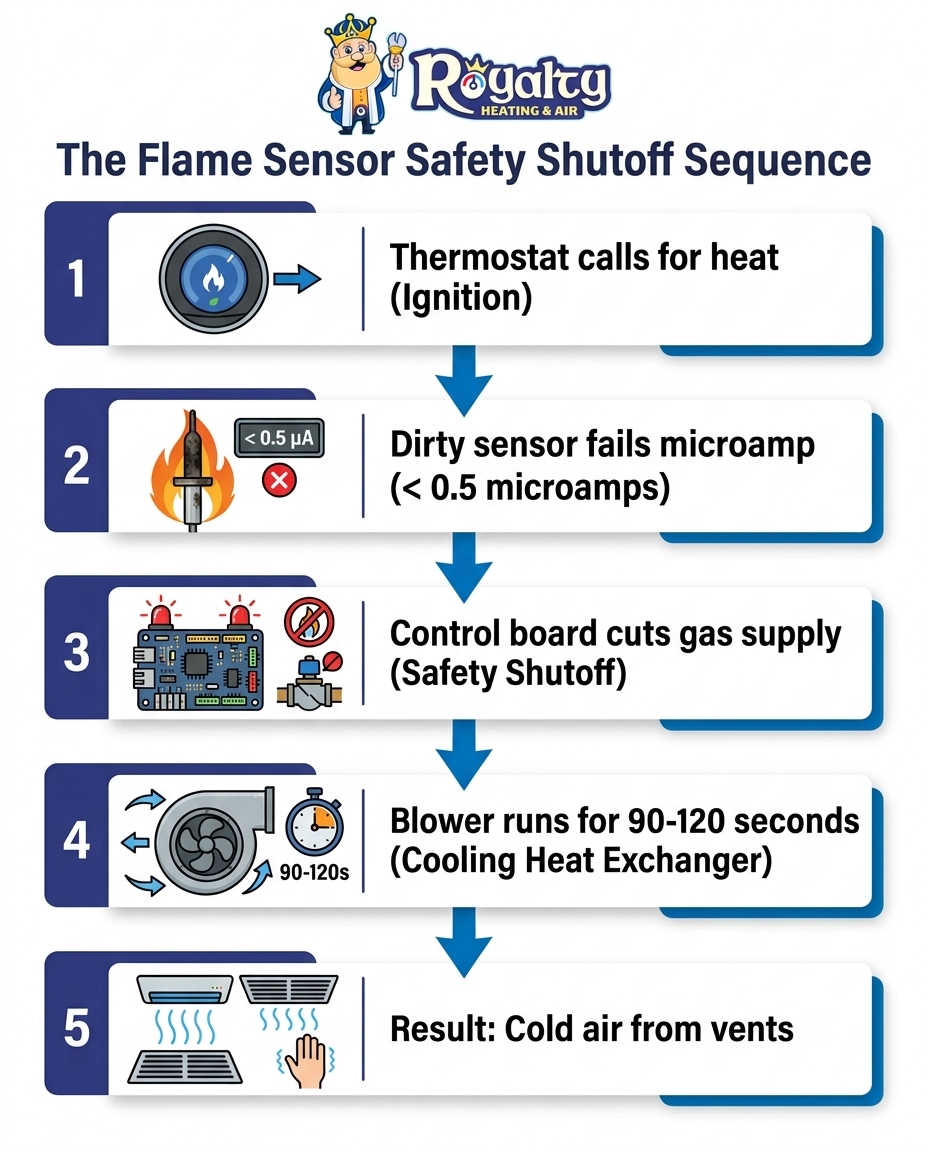
When you initiate that early fall / September first-heat test, you expect a seamless transition from a cold house to a warm one. But when the flame sensor is compromised, a very specific sequence of events occurs, resulting in cold air blowing from your vents. Here is the exact chain reaction that takes place inside your furnace:
1. The thermostat calls for heat: You set the temperature higher, sending a signal to the furnace control board to begin the heating cycle. The draft inducer motor starts, the igniter glows, and the gas valve opens. The burners ignite normally.
2. The dirty sensor fails the microamp check: The flames engulf the sensor, but a layer of dust or carbon buildup acts as an electrical insulator. Because of this dirt, the microamp reading drops below the required threshold (usually under 0.5 microamps).
3. The control board cuts the gas supply: Believing the flame has gone out (or never ignited), the control board triggers a safety shutoff. Within three to seven seconds of ignition, it slams the gas valve shut to prevent a dangerous gas buildup.
4. The blower fan continues to run: Even though the fire is out, the heat exchanger briefly got hot during those few seconds of ignition. The furnace blower fan is programmed to run for 90 to 120 seconds to safely extract that residual heat and cool the heat exchanger down, preventing the metal from cracking.
5. Cold air enters the home: Because the burners are off but the fan is still pushing air through your ductwork, the air coming out of your vents feels cold.
If the furnace was working perfectly at the end of last winter, why does it suddenly fail in September? The answer lies in the long, dry cooling season. In Roseville CA, the hot summer months mean your furnace sits completely dormant while your air conditioner works overtime. During this inactive period, airborne particulates, pet dander, and dry dust constantly circulate through your home's ductwork.
Because the furnace shares the same blower and cabinet as your AC, this dust inevitably settles on the internal heating components. The flame sensor, sitting exposed in the burner assembly, collects a fine layer of this debris over the course of four or five months. When you factor in the dry, dusty climate of the region, this accumulation happens faster than in more humid environments.
The Impact of Indoor Air Quality:
Poor indoor air quality accelerates this buildup significantly. If your home has high levels of airborne dust, or if you skipped changing your air filters during the peak of summer, that debris ends up on the sensor. When the furnace fires up for the very first time in the fall, the heat instantly bakes that summer dust onto the metal rod, creating a hard, insulating crust. This baked-on layer blocks the electrical current, causing the sensor to fail its very first test of the season.
When the vents start blowing cold air during an early fall / September first-heat test, it is easy to feel frustrated. However, it is important to reframe this symptom: your furnace is not broken; it is actively protecting you. The system shutting down the burners is exactly what it was engineered to do. If the sensor fails to detect a flame and the gas valve remains open, unburned natural gas would rapidly fill your home, creating a severe health and safety hazard.
A furnace blowing cold air under these specific conditions is actually proof that the internal safety systems are working flawlessly. The control board recognized a potential threat (a lack of confirmed flame) and took immediate action to secure the system.
When safety systems lock out your furnace, getting fast, professional help is critical to restoring your comfort. One local homeowner reached out during a cold snap when they needed heating service urgently. Because their system had shut down, they were facing a freezing night indoors. A technician was able to arrive a day earlier than scheduled, diagnosing the safety lockout and getting the system back online, which saved the customer from spending an extra night relying on space heaters.
It is also worth noting that if your flame sensor is coated in dust, other critical internal components likely are, too. Significant buildup on internal motors, blower wheels, and evaporator coils often accompanies a dirty sensor. This means the system requires a comprehensive rejuvenation to restore its baseline safety and efficiency, rather than just a quick wipe-down of a single part.
If you search the internet for solutions when your furnace is running but blowing cold air, you will likely find dozens of articles and videos suggesting you can easily clean a flame sensor yourself using steel wool, emery cloth, or sandpaper. This is a dangerous myth that can lead to permanent damage and costly repairs.
The flame sensor rod is highly delicate. While it may look like a sturdy piece of metal, using abrasive materials on it leaves microscopic scratches along the surface. These tiny grooves act like magnets for soot, carbon, and dust. If you scratch the sensor, it will get dirty much faster in the future, leading to repeated shutdowns and eventually requiring a complete replacement of the part.
• Using sandpaper or steel wool creates microscopic scratches that trap future soot. — Professional Solutions: Technicians use specialized, non-abrasive materials designed specifically for delicate HVAC sensors.
• Applying too much pressure can crack the fragile ceramic insulator at the base. — Professional Solutions: Professionals know how to handle the assembly without stressing the ceramic mount.
• Opening the combustion chamber without training poses severe safety hazards. — Professional Solutions: Licensed experts ensure the gas valve and electrical systems are safely secured during maintenance.
• Unauthorized tampering often voids the manufacturer's warranty on the furnace. — Professional Solutions: Professional service keeps your warranty intact and provides documented proof of maintenance.
Furthermore, improper handling can easily crack the ceramic insulator at the base of the sensor. If this porcelain cracks, the microamp current will short out to the metal chassis before it ever reaches the flame, causing the furnace to fail permanently. Opening the combustion chamber yourself poses significant safety risks, and unauthorized DIY work frequently voids the manufacturer's warranty on your equipment.
Because the flame sensor relies on such a tiny electrical current, diagnosing it requires specialized tools and professional expertise. When you schedule a fall tune-up before the colder weather hits, a licensed technician does much more than just look at the furnace. They perform a series of rigorous electrical tests to ensure the system is operating within safe parameters.
At Royalty Heating & Air, our tune-ups specifically include microamp verification. Technicians use highly sensitive multimeters placed in series with the flame sensor wire to measure the exact electrical current while the furnace is running. We are looking for a strong, steady reading well above the 0.5 microamp threshold. Catching a weak signal early allows us to address microscopic insulation before it causes a sudden shutdown on a freezing night.
A thorough tune-up also involves explaining each step of the process so you understand the health of your system. As one customer noted after a winter service call, technicians Jason and Jeremy performed a complete check-up and thorough cleaning of the entire system, ensuring everything from the ducts to the internal components was safe and ready to perform. This level of detail is why routine preventative maintenance is the most reliable way to protect your home. Technicians safely clean the sensor using industry-approved, non-abrasive methods, ensuring the rod remains smooth and functional for the entire season.
If your furnace ignites but immediately starts blowing cold air, it is usually because the safety control board shut off the gas valve. When a dirty flame sensor fails to detect the fire, the system cuts the gas to prevent a leak. The blower fan then continues to run for a few minutes to cool down the heat exchanger, which pushes cold air through your vents.
A dirty flame sensor acts as an electrical insulator, preventing the microamp current from traveling through the flame. Without this electrical signal, the furnace's brain assumes there is no fire. This causes the system to repeatedly shut down the burners shortly after they ignite, leaving your home cold and forcing the system to work harder.
The furnace fan keeps running as a built-in safety feature to protect the heat exchanger. Even if the burners only ran for a few seconds, the metal heat exchanger gets hot. The fan runs for 90 to 120 seconds to extract that residual heat. If the fan shut off immediately, the trapped heat could cause the metal to crack over time.
Yes, a dirty flame sensor is one of the most common causes of short cycling in Roseville CA. The furnace will turn on, ignite the burners, fail to sense the flame, and shut down. It will often try this sequence three or four times in a row before going into a "hard lockout," where it refuses to run at all until it is reset and serviced.
A furnace flame sensor should be professionally inspected and cleaned once a year, ideally during your annual fall preventative maintenance visit. Having a technician clean the sensor before the heating season begins ensures that summer dust buildup is removed before it can bake onto the rod and cause unexpected breakdowns.
Ultimately, a dirty flame sensor is a relatively minor issue that triggers a major, necessary safety response. When your early fall / September first-heat test results in cold air, it is simply your furnace doing its job to keep your household safe from unburned gas.
While the symptom is alarming, the solution is straightforward. Relying on professional preventative maintenance is the safest, most effective way to resolve the cold air problem and protect the delicate components inside your system. By scheduling a pre-season inspection with a qualified technician, you can ensure that your safety mechanisms are functioning perfectly, giving you reliable, warm air and total peace of mind all winter long.
