
Services
About
Service Areas


Understanding how clogged dryer vents cause house fires starts with one simple fact: lint is highly flammable, and your dryer produces it with every single load.
When lint builds up inside the vent, it blocks airflow. The dryer then runs hotter than it should. Eventually, that trapped heat can ignite the lint — and a house fire starts.
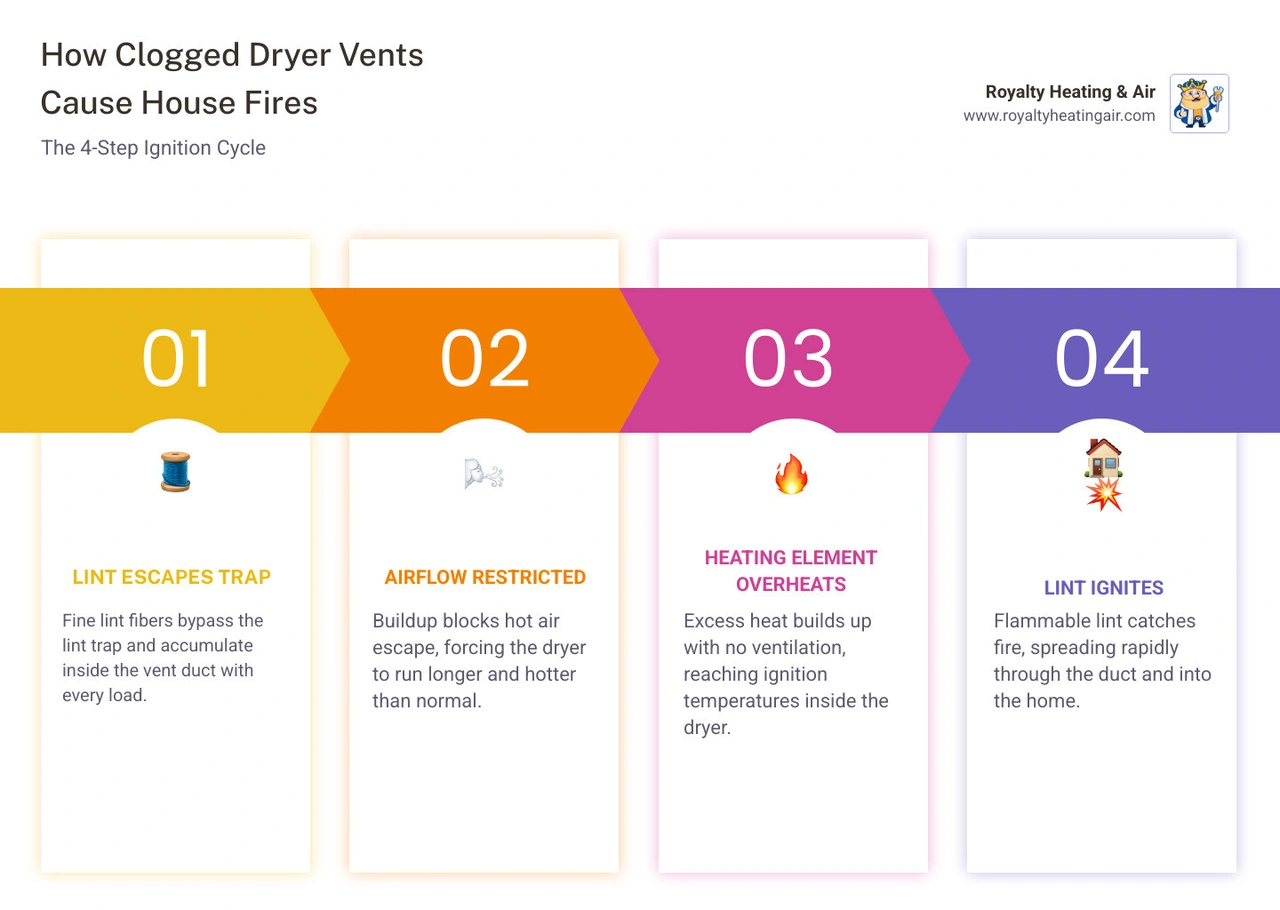
Here's a quick breakdown of how it happens:
1. Lint escapes the trap and collects inside the vent duct over time.
2. Airflow becomes restricted, forcing the dryer to work harder and generate more heat.
3. The heating element overheats because hot air has nowhere to escape.
4. Lint ignites — a material that burns easily — and fire spreads through the duct or into the home.
This is not a rare edge case. According to the National Fire Protection Association, dryers and washing machines cause an average of 15,970 fires every year in the U.S., with dryers responsible for 92% of them. Failure to clean is the leading cause — accounting for roughly one in three dryer fires.
For busy homeowners in Roseville and the surrounding area, it's easy to assume a quick lint trap clean after each load is enough. It isn't. Fine fibers still pass through the trap and slowly build up deep inside the vent — often unnoticed until something goes wrong.
The good news? This fire hazard is almost entirely preventable with the right maintenance habits and regular professional inspections.
Dryer fires are more common than most homeowners realize. U.S. fire department data has estimated about 2,900 clothes dryer fires in residential buildings each year, causing around 5 deaths, 100 injuries, and $35 million in property loss. In those incidents, failure to clean was the leading contributing factor, and lint, dust, and fiber were often the first materials ignited.
That matters because the danger is not just "a dirty dryer." The real problem is a heat-producing appliance connected to a vent system that can quietly fill with fuel. If you want a deeper look at the risks, our article on dryer vent fire hazards breaks down the issue further.
A dryer works by moving heated air through tumbling clothes and then pushing moisture and lint out through the vent. When that vent gets clogged, three dangerous things happen at once:
1. Lint keeps accumulating.
2. Hot air cannot escape properly.
3. Internal components run hotter and longer.
Lint is especially dangerous because it is made of tiny dry fibers with a lot of surface area. In simple terms, it catches fire easily. Once airflow is restricted, heat builds up near the heating element, heater box, exhaust path, or inside the vent duct itself. That combination of fuel plus heat plus oxygen is a bad little science experiment happening in your laundry room.
Restricted airflow also makes the dryer run longer to finish a load. So the appliance is not just hotter, it is hot for a longer period of time. That extended heat exposure increases the chance of ignition.
Here is the big-picture safety data homeowners should know in May 2026:
• About 2,900 residential dryer fires are reported annually in the U.S.
• Those fires are associated with about 5 deaths, 100 injuries, and $35 million in property damage.
• Dryers and washing machines together are linked to an average of 15,970 fires per year.
• Dryers account for 92% of those laundry-related fires.
• Annual property damage tied to laundry appliance fires has been estimated at about $200 million.
• Failure to clean is responsible for roughly 34% of dryer fire ignitions.
• Dust, fiber, and lint are the first items ignited in about 28% of residential dryer fires.
That is why routine maintenance matters so much. Our dryer fire prevention tips cover the habits that help keep lint from turning into a serious hazard.
Usually, yes, it is at least a warning sign.
If your dryer suddenly needs two cycles for a normal load, the most likely issue is restricted airflow. That does not always mean a fire is about to happen today, but it does mean your system is not venting correctly, and the same conditions that waste energy can also increase fire risk.
Common warning signs of a clogged dryer vent include:
• Clothes taking much longer than normal to dry
• Clothes that still feel damp at the end of a cycle
• The dryer or laundry room feeling unusually hot
• A burning smell during operation
• A musty odor on clothes
• Excess lint around the dryer door, hose, or outside vent cap
• The exterior vent flap not opening properly
• The top of the dryer feeling too hot to touch comfortably
These symptoms matter because they all point back to poor exhaust flow. Hot, moist air should leave the home efficiently. If it cannot, heat and lint stay trapped in the system.
For homeowners needing dryer vent cleaning in Roseville, CA, the smartest move is to have the full vent path checked, not just the lint screen. The clog may be behind the dryer, inside the wall, at the roof or exterior termination, or in a crushed transition duct.
A clothes dryer removes moisture fast. In fact, a normal load can release a surprising amount of water into the exhaust stream. Some fire safety guidance notes that dryers may remove up to about 1.5 gallons of water from wet clothes in a single load. That warm, damp air has to go somewhere.
When the vent is clear, the system moves that air outside. When the vent is blocked, moisture, heat, and lint stay in the line longer. Lint sticks to the duct walls. More lint collects. Airflow gets even worse. This is the home-maintenance version of "it snowballed quickly."
There is also a thermostat problem. Dryers are designed to sense and regulate temperature based on expected airflow. If that airflow is reduced, parts of the system can become much hotter than intended, especially near the heater box or heating element.
If you are already good about basic lint screen care, keep doing it. Our guide on how to clean your dryer lint trap is a great starting point. Just remember: lint trap cleaning helps, but it does not remove lint buried deeper in the vent.
Here is a simple comparison of vent materials:
• Rigid metal duct — Fire safety: Best option — Airflow performance: Strong, smooth airflow — Common problem: Fewer places for lint to snag
• Semi-rigid metal duct — Fire safety: Good in short transition runs — Airflow performance: Better than foil — Common problem: Can still kink if crushed
• Flexible foil duct — Fire safety: Higher risk — Airflow performance: Poorer airflow — Common problem: Sagging traps lint, crushes easily
• Plastic or vinyl duct — Fire safety: Unsafe — Airflow performance: Poor airflow — Common problem: Can melt, sag, and ignite more easily
Improper vent materials make the hazard worse. Plastic ducts and thin flexible foil hoses are known trouble spots because they sag, trap lint, and can be crushed behind the dryer. Once that happens, airflow drops fast.
Other installation errors that increase risk include:
• Vent runs that are too long
• Too many bends or elbows
• Crushed transition hoses behind the dryer
• Loose joints that leak hot lint-filled air
• Venting into an attic, crawlspace, or garage instead of outdoors
• Exterior caps blocked by lint, nests, or debris
Modern codes and best practices favor metal venting with a smooth interior and a direct route outdoors. If your setup is older or questionable, it is worth having it inspected. Even though one of the provided location links is outside our service area, the safety principle is universal: replace unsafe ducting with proper metal venting and keep the line clear.
Dryer fires are not evenly spread throughout the year. Fire data has shown a noticeable peak in January.
Why winter? A few reasons:
• We do more laundry during colder months
• Heavy blankets, bedding, and bulky clothing stress the dryer
• Exterior vent caps may get blocked more easily by weather or debris
• Holiday laundry volume can increase overall dryer use
In practical terms, winter is when a partially clogged vent is more likely to reveal itself. If your dryer starts struggling with towels or comforters in colder months, do not ignore it.
Reliable dryer vent maintenance is not just about removing visible lint. It means checking the entire system for airflow restrictions, unsafe materials, damage, disconnections, and poor exhaust termination.
For homeowners looking into dryer vent cleaning in Rocklin, CA or dryer vent cleaning in Lincoln, CA, a good maintenance plan should include both cleaning and inspection.
Key dryer vent maintenance steps include:
• Clean the lint screen after every load
• Wash the lint screen periodically to remove residue
• Inspect the vent hose behind the dryer for kinks or crushing
• Check that the vent exhausts directly outdoors
• Make sure the outside vent flap opens freely
• Remove lint buildup from the vent line regularly
• Schedule full vent inspection and cleaning at least annually
• Clean more often for large households, frequent laundry, or pet hair-heavy homes
• Keep the area around the dryer free of boxes, rags, and other combustibles
• Never dry items contaminated with gasoline, solvents, or cooking oils
Additional fire risk factors are often overlooked. Overloading the dryer can reduce airflow through the clothes themselves. Running the dryer unattended or while sleeping removes the chance to catch problems early. Drying oil-soaked towels or flammable materials can create ignition risks even if the vent is clean.
DIY maintenance helps, but it has limits.
A homeowner can usually clean the lint trap, vacuum around the dryer, and remove some debris from an accessible transition hose. What most DIY methods cannot do well is remove deep lint packed in long vent runs, hidden elbows, wall cavities, or rooftop terminations.
Professional cleaning is recommended because it can address:
• Deep clogs out of reach of household tools
• Hidden lint behind wall runs
• Crushed or disconnected duct sections
• Airflow problems caused by poor installation
• Exterior vent blockages from nests or debris
• Safety issues with plastic or foil ducting
Professional service may also include airflow testing and a closer inspection of the vent path, which helps identify why lint is building up in the first place. Our ultimate dryer vent cleaning guide explains what a thorough service should involve.
If a dryer fire starts, act quickly but safely.
1. Stop the dryer immediately.
2. Unplug the unit if you can do so without putting yourself in danger.
3. Keep the dryer door closed if the fire is inside the drum. Opening it can feed the fire with oxygen.
4. Evacuate everyone from the home.
5. Call 911.
6. Use a fire extinguisher only if the fire is very small, you have a clear exit, and you know how to use it safely.
7. Do not go back inside until firefighters say it is safe.
Smoke alarms matter here. Fire data has shown alarms were present in many dryer fire incidents, but they were not always present or operating. That means smoke alarms are essential, but they are not a substitute for prevention. Test them regularly and replace batteries or units as needed. Automatic sprinkler systems can also reduce fire spread, though they are far less common in homes.
Dryer vent maintenance is one of those household tasks that seems small until it really, really is not. A clogged vent can increase fire risk, waste energy, shorten dryer life, and leave you wondering why a basic load of towels suddenly takes all afternoon.
The good news is that the solution is straightforward: regular lint removal, proper metal venting, annual inspections, and professional cleaning when buildup goes beyond the easy-to-reach spots.
At Royalty Heating & Air, we believe home comfort and home safety go hand in hand. We are proud to serve homeowners in Roseville, Rocklin, Lincoln, Loomis, Granite Bay, and nearby communities. Through our partnership with the MackAttack Foundation, we also support foster babies and help sponsor family adoptions, because caring for local families should extend beyond the job itself.
If your dryer is overheating, taking too long to dry, or showing signs of a vent blockage, schedule your professional dryer vent cleaning today.
For most homes, once a year is a solid rule. Some households should schedule service more often, including:
• Large families doing frequent laundry
• Homes with pets
• Households washing lots of towels or bedding
• Homes where the dryer vent run is long or has multiple turns
• Anyone already seeing warning signs of poor airflow
If you are in one of our broader service regions and want to learn more, our Auburn dryer vent cleaning page offers additional service information.
Absolutely.
When airflow is restricted, the dryer takes longer to do the same job. That means more run time, more energy use, and more wear on parts. Keeping the vent clear helps the dryer run more efficiently, which can reduce wasted energy and extend appliance life.
A clean vent also helps clothes dry more evenly and may reduce repeated cycles. That is good for your utility usage and your dryer. For more service details, visit our Stockton dryer vent cleaning page.
No. It is necessary, but it is not enough by itself.
The lint trap catches a lot of debris, but fine fibers still pass through and collect inside the vent system over time. That is why a dryer can have a clean screen and still have a dangerous clog deeper in the line.
Think of the lint trap as your first layer of defense, not the whole defense. Full prevention means:
• Cleaning the lint trap every load
• Inspecting the vent system regularly
• Using proper metal ducting
• Keeping the exterior cap clear
• Scheduling professional cleaning on a routine basis
For another local service resource, see our Fair Oaks dryer vent cleaning page.
If you want more practical help, we also recommend these related resources:
• Prevent dryer fires with smart maintenance
• Learn more about the fire hazards of neglected dryer vents
• Read our complete dryer vent cleaning guide
• Find local dryer vent cleaning information
• See tips for cleaning your dryer lint trap
When it comes to how clogged dryer vents cause house fires, the takeaway is simple: if your dryer cannot breathe, it can overheat. And if lint is waiting in the vent, that heat has fuel. A little maintenance now can help prevent a very big problem later.

