
Services
About
Service Areas


Knowing how often should you change your HVAC air filter is one of the simplest ways to protect your system, lower your energy bills, and keep the air in your home clean. Most homeowners don't think about it until something goes wrong — the house feels stuffy, the system runs constantly, or the energy bill spikes without explanation.
Here's a quick answer based on filter type:
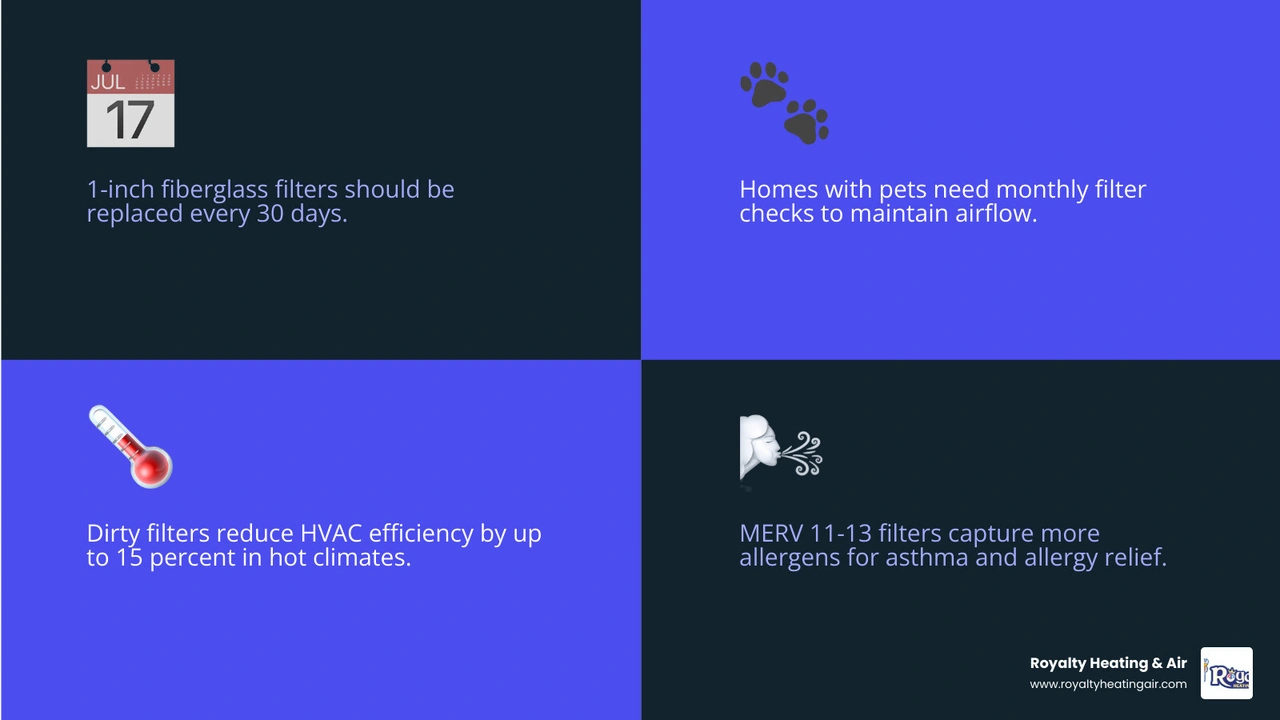
• 1-inch fiberglass — Typical Lifespan: Every 30 days
• 1-inch pleated — Typical Lifespan: Every 60-90 days
• 4-inch pleated media — Typical Lifespan: Every 6 months
• 5-inch high-capacity media — Typical Lifespan: Up to 12 months
Adjust sooner if you have:
• Pets (check monthly)
• Allergies or asthma (check monthly, use MERV 11-13)
• Multiple occupants or a larger home
• Active construction or wildfire smoke nearby
Your filter is the first line of defense for both your HVAC equipment and the air your family breathes. A clogged filter forces your system to work harder, and according to the U.S. Department of Energy, replacing a dirty filter can improve system efficiency by 5-15%. In Roseville's hot summers, where your AC may run 12 or more hours a day, that adds up fast.
This guide walks you through everything you need to know — filter types, replacement schedules, MERV ratings, and a simple 5-step process to get it done right.
Many homeowners treat filter replacements like a yearly chore, but the reality is that waiting too long can seriously damage your heating and cooling system. When a filter becomes loaded with dust, pet dander, and airborne fibers, it restricts the airflow your system needs to function properly.
This restricted airflow directly impacts your system's efficiency. When the blower motor has to work twice as hard to pull air through a clogged filter, it consumes significantly more electricity, causing your monthly utility bills to rise. Over time, this extra strain leads to premature wear and tear on expensive components, which is why regular filter maintenance is a cornerstone of our Annual Furnace Maintenance Guide.
To keep your system running optimally throughout the changing seasons, we recommend aligning your filter checks with seasonal transitions. Our Spring Air Filter Replacement Guide is an excellent resource for preparing your system for the heavy cooling loads of summer, ensuring you start the high-use season with a clean, free-flowing filter.
The exact timeline for replacing your filter depends heavily on the materials used to construct it. Standard disposable filters fall into a few distinct categories, each with its own physical characteristics and expected lifespan:
• Fiberglass Filters (Disposable): These are the thin, green or blue translucent filters you often see sold in inexpensive multi-packs. They are designed primarily to protect your HVAC equipment from large dust particles, rather than purifying your indoor air. Because they have very little surface area, they clog rapidly and must be replaced every 30 days or less.
• Pleated Filters (Disposable): Made from folded polyester or cotton fibers, pleated filters have significantly more surface area than flat fiberglass models. This design allows them to trap much smaller particles—like pollen, mold spores, and dust mites—without restricting airflow. A standard 1-inch pleated filter typically lasts between 60 to 90 days.
• Media Filters (High-Capacity): These are thick, sturdy filters (usually 4 to 5 inches deep) housed in a dedicated cabinet next to your furnace or air handler. Because of their deep pleats, they have an incredibly large surface area. They can trap massive amounts of dust and debris before causing a pressure drop, allowing them to last anywhere from 6 to 12 months.
• Fiberglass — Thickness: 1 inch — Typical Lifespan: 30 days or less — Best Used For: Basic equipment protection; low-occupancy homes
• Standard Pleated — Thickness: 1 inch — Typical Lifespan: 60–90 days — Best Used For: Average households; balanced filtration and airflow
• Deep Pleated Media — Thickness: 4 inches — Typical Lifespan: 6–9 months — Best Used For: Homes with high dust; allergy sufferers; busy households
• High-Capacity Media — Thickness: 5 inches — Typical Lifespan: 9–12 months — Best Used For: Maximum filtration capacity; long-term convenience
While the table above provides a solid baseline, your household's unique lifestyle and health needs will ultimately dictate your replacement schedule. If you have furry family members, your filters will clog much faster. Dogs and cats constantly shed hair and microscopic dander, which is pulled directly into your return air vents. If you have multiple pets, we highly recommend inspecting your filter every 30 days, even if you use a pleated filter designed to last longer.
For those managing asthma, seasonal allergies, or other respiratory sensitivities, keeping a clean filter in place is essential for maintaining comfort. A dirty filter can no longer capture airborne irritants, allowing them to recirculate through your living spaces. Frequently swapping out your filter is one of the most effective ways to Reduce Home Dust and keep airborne allergens at bay.
Home size also plays a major role in filter wear. A smaller home has less air volume, meaning the total concentration of dust and pet dander can build up quickly in a confined space. Conversely, a very large home may have multiple HVAC systems or larger units that pull massive volumes of air through the system daily, requiring a vigilant maintenance schedule to keep the system running cleanly.
Beyond your household makeup, several environmental and physical factors influence how quickly your filter reaches capacity. Understanding these variables helps you move away from a rigid calendar schedule and transition to an active, visual inspection routine.
• MERV Ratings: The Minimum Efficiency Reporting Value (MERV) scale measures how effectively a filter traps particles of various sizes. Higher MERV ratings mean tighter weaves that catch smaller contaminants, but these filters also fill up faster because they capture a wider range of debris.
• Seasonal Usage: During the mild spring and autumn months in Placer County, your HVAC system may rarely run, meaning very little air is passing through the filter. However, during our scorching Roseville summers, your system runs almost continuously. Increased run time equals increased air volume, which accelerates dust accumulation.
• Thermostat Fan Settings: If you run your thermostat fan on the "ON" setting rather than "AUTO," your system provides continuous air filtration even when it isn't actively heating or cooling. While this is great for air purity, it means your filter is working 24/7 and will need to be replaced roughly twice as often.
If you notice your home feels dustier than usual, or if your cooling system seems to be running longer cycles to reach your desired temperature, it is likely time for an AC Filter Replacement to restore proper system breathing.
When comparing filters, thickness is one of the most important physical traits to consider. A standard 1-inch filter has a limited surface area because the pleats are shallow. This means it has a relatively small holding capacity for dust before it begins to restrict airflow and increase static pressure within your ductwork.
A 4-inch or 5-inch media filter is a completely different beast. Because the pleats are several inches deep, the actual surface area of the filtering material is massive. This design allows the filter to capture a high volume of small particles over a much longer period without putting a strain on your blower motor.
However, you cannot simply slide a 4-inch filter into a slot designed for a 1-inch filter. Doing so will crush the filter or prevent the access door from closing, leading to unconditioned air bypassing the filter entirely. Ensuring your filter fits perfectly is crucial, as dust bypassing a poorly sealed filter can settle directly on your system's internal components, leading to issues discussed in our guide on How Dirty Ducts Affect Your HVAC Performance.
When shopping for replacement filters, you will likely encounter both Original Equipment Manufacturer (OEM) and aftermarket options. OEM filters are produced by the brand that manufactured your specific HVAC system (such as Carrier, Lennox, or Daikin). They are built to the exact physical dimensions and performance specifications of your unit.
Aftermarket filters are produced by third-party manufacturers. They are often highly cost-effective and readily available in bulk packs. When choosing aftermarket filters, pay close attention to the difference between nominal size and actual size:
• Nominal Size: This is the rounded-up size printed in bold on the filter frame (e.g., 20" x 25" x 1").
• Actual Size: This is the precise physical measurement of the filter, which is typically about 0.5 inches smaller than the nominal size (e.g., 19.5" x 24.5" x 0.75").
Always measure your existing filter or check your equipment manual to ensure a snug fit. A filter that is too loose will allow dirty air to slip around the edges, rendering the filter far less effective. Generally, high-quality aftermarket filters perform beautifully and save you money, provided they match your system's size requirements and do not void any active manufacturer warranties.
Changing your air filter is a quick, straightforward task that requires no special tools. By making this a regular part of your home routine, you can protect your investment and enjoy cleaner indoor air.
Follow these 5 simple steps to replace your filter correctly:
1. Power Down the System: For safety, always turn off your HVAC system at the thermostat before changing the filter. This prevents the system from kicking on while you have the filter removed, which could pull loose dust or loose objects directly into the unprotected blower fan.
2. Locate the Filter Slot: Your filter is typically located in the return air duct next to your indoor air handler or furnace cabinet, or behind a return air grille on a wall or ceiling. Remove the access door or unlatch the grille to expose the filter.
3. Perform a Quick Visual Inspection: Slide the old filter out. Hold it up to a bright light source (like a window or a flashlight). If light cannot pass through the fibers, or if the filter is covered in a thick, gray layer of dust and pet hair, it has reached the end of its lifespan and must be replaced.
4. Check the Airflow Direction Arrow: Look closely at the outer frame of your new filter. You will see one or more printed arrows indicating the direction of airflow. These arrows must point toward your HVAC unit (away from the return duct and toward the blower motor). Installing a filter backward restricts airflow and can cause the filter to warp or collapse under pressure.
5. Slide the New Filter In and Seal: Carefully slide the new filter into the slot, making sure it sits flush without bending or buckling. Securely replace the access cover, latching any levers or gaskets to prevent air leaks. Turn your system back on at the thermostat, and write the installation date on the edge of the filter frame with a marker so you can easily track its age during your next monthly check!
Neglecting your air filter is a recipe for system strain and eventual breakdown. As the filter becomes completely choked with debris, the restricted airflow prevents your system from circulating air effectively. During the summer, this lack of airflow can cause the evaporator coil to freeze over, turning your indoor unit into a solid block of ice and stopping all cooling.
Furthermore, a clogged filter allows dust to bypass the filtration media, settling on the blower motor, electrical components, and ductwork. This buildup can lead to premature blower motor failure, uneven temperatures throughout your home, and a drastic drop in indoor air quality. To learn more about protecting your home's air, explore our Room by Room Guide to Better IAQ.
Washable electrostatic filters are an option for some homeowners, but they come with important trade-offs. While they eliminate the need to buy disposable filters, they generally offer lower filtration efficiency for microscopic particles compared to high-quality pleated filters.
Additionally, washable filters must be cleaned thoroughly with water and allowed to dry completely before reinstalling them. If you slide a damp filter back into your dark, warm HVAC cabinet, you create the perfect breeding ground for mold and mildew, which can quickly spread spores through your home's ventilation. For a deep dive into assessing your home's air health, see our Indoor Air Quality Testing Roseville Guide.
The MERV rating system helps you choose a filter that balances air cleaning power with proper system airflow:
• MERV 1–4: Typically basic fiberglass filters. They capture large particles like sanding dust and lint but do little to improve air quality.
• MERV 5–8: Standard residential pleated filters. Excellent for capturing household dust, pollen, and mold spores without restricting airflow.
• MERV 9–12: Superior pleated filters. Ideal for homes with pets or allergy sufferers, as they capture finer particles like pet dander and smog.
• MERV 13–16: High-efficiency filters. These capture bacteria, smoke, and very fine droplets. However, they are dense and can restrict airflow in older or standard residential systems unless the system is specifically designed to handle them.
Keeping your HVAC air filter clean is one of the most cost-effective and impactful steps you can take as a homeowner. Whether you live in Roseville, Rocklin, Granite Bay, Loomis, or Lincoln, staying on top of your filter replacement schedule ensures your home remains a comfortable, healthy sanctuary all year long.
At Royalty Heating & Air, we are proud to serve our local Placer County communities with expert heating, cooling, and air quality solutions. Beyond keeping your home comfortable, we are deeply committed to giving back. Through our proud partnership with the MackAttack Foundation, we actively support foster babies and sponsor loving family adoptions, meaning every service we provide helps make a meaningful difference in a child's life.
If you want to take the guesswork out of your home's comfort and efficiency, consider exploring our custom HVAC Maintenance Plans Tips Homeowners. Ready to experience a breath of fresh air? Schedule professional indoor air quality services in Rocklin and Roseville with our friendly, expert team today!

