
Services
About
Service Areas


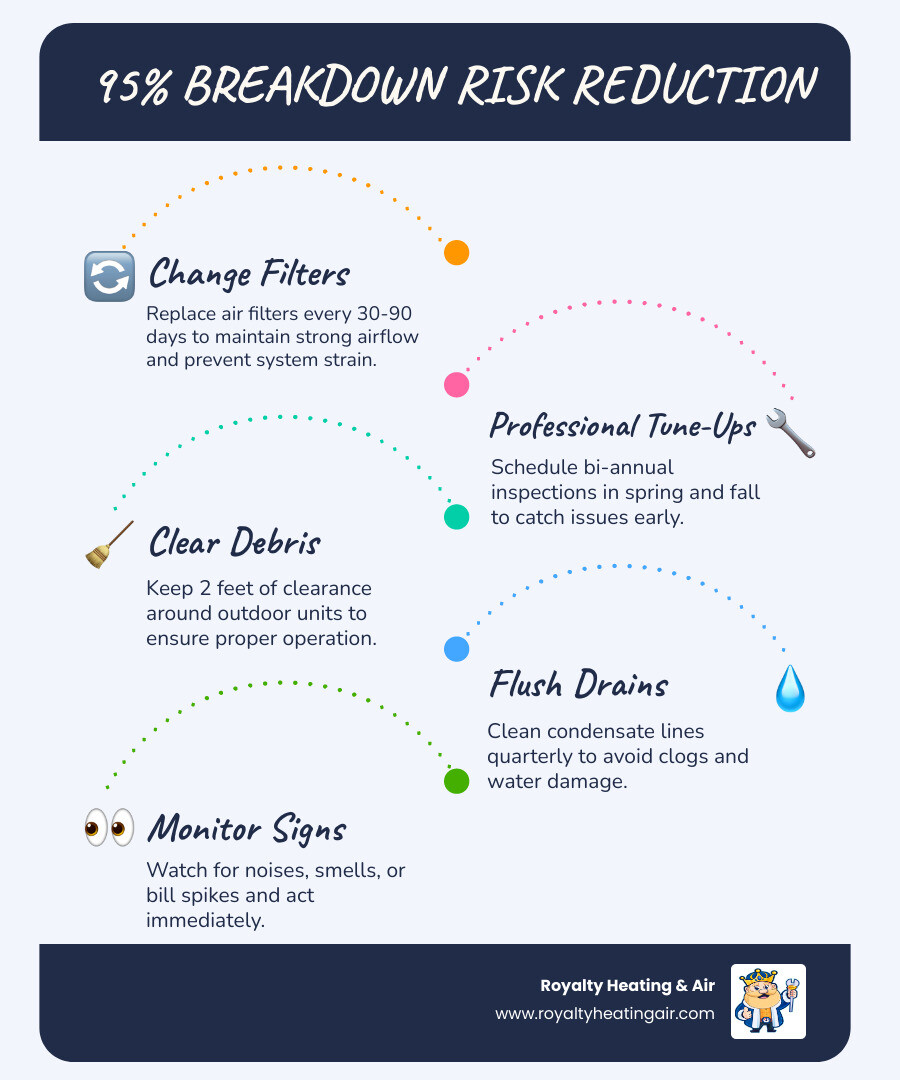
How to prevent HVAC emergencies with maintenance is simpler than most homeowners think — and the payoff is massive. Here's a quick breakdown:
1. Change air filters every 30–90 days to keep airflow strong and reduce system strain
2. Schedule professional tune-ups twice a year — spring for cooling, fall for heating
3. Keep outdoor units clear of debris with at least two feet of clearance
4. Flush condensate drain lines every three months to prevent clogs and water damage
5. Watch for warning signs like unusual noises, odd smells, or rising energy bills and act fast
Your HVAC system runs quietly in the background, keeping your Roseville home comfortable through triple-digit summers and chilly winter nights. Most homeowners don't think about it — until it stops working. And when it does, it always seems to happen at the worst possible moment.
Here's the reality: according to industry data, regular maintenance can cut the risk of costly HVAC breakdowns by up to 95%. Yet fewer than half of all homeowners had their system serviced in the past year. That gap between what's possible and what most people actually do is exactly where HVAC emergencies are born.
At Royalty Heating & Air, we've seen it happen over and over — a small, fixable issue gets ignored, and months later a homeowner is dealing with a full system failure during a heat wave. This guide walks you through exactly what to do, and when, so that never happens to you.
To understand how to prevent HVAC emergencies with maintenance, we first need to look at what causes the system to quit in the first place. Think of your HVAC system like a high-performance vehicle; if you never change the oil or check the brakes, a breakdown is inevitable.
Airflow RestrictionThe single most common cause of system failure is also the most preventable: a dirty air filter. When a filter is clogged with dust, pet dander, and Sacramento Valley pollen, your blower motor has to work twice as hard to pull air through. This causes the motor to overheat and can lead to frozen evaporator coils, even in the middle of a July heatwave.
Electrical ConnectionsHVAC systems rely on a complex web of wires, capacitors, and contactors. Over time, vibrations from the unit can loosen electrical connections. In our local climate, humidity and heat can also cause wires to fray or contacts to corrode. If a capacitor fails, your compressor or fan motor won't start, leaving you without climate control.
Refrigerant LeaksMany homeowners believe refrigerant is like gas in a car—that it just "runs out." In reality, your HVAC is a closed loop. If you are low on refrigerant, you have a leak. Operating a system with low refrigerant levels puts immense strain on the compressor, which is often the most expensive part to replace.
Condensate ClogsYour AC doesn't just cool the air; it removes moisture. That water drains through a small pipe. If algae or debris build up in that line, the water backs up. This can lead to a system shutdown (if you have a safety switch) or, worse, significant water damage to your drywall and flooring.
Thermostat CalibrationSometimes the "emergency" isn't the heater or AC at all—it's the brain of the system. A thermostat that is out of calibration or has dying batteries can cause "short cycling," where the system turns on and off too frequently, wearing out components prematurely.
Understanding these risks is the first step in avoiding Common Furnace Maintenance Mistakes and ensuring your home stays comfortable year-round.
The difference between a well-maintained system and a neglected one is staggering. When we visit homes in Rocklin or Lincoln, we can often tell within minutes how well a system has been cared for just by the sound it makes and the temperature of the air coming from the vents.
• Breakdown Risk — Maintained System: 5% (Very Low) — Neglected System: 95% (Very High)
• Energy Usage — Maintained System: 10-20% Lower — Neglected System: High / Inefficient
• Average Lifespan — Maintained System: 15-25 Years — Neglected System: 8-12 Years
• Air Quality — Maintained System: High (Filtered & Clean) — Neglected System: Low (Dust & Allergens)
• Warranty Status — Maintained System: Valid — Neglected System: Often Voided
Risk Reduction and LongevityThe primary goal of maintenance is to catch small issues before they become "Sunday afternoon at 100 degrees" emergencies. Annual maintenance can literally double the remaining life of your equipment. By keeping parts lubricated and clean, you reduce friction and heat—the two biggest enemies of mechanical longevity.
Energy Efficiency and Air QualityA clean system is an efficient system. Research shows that well-maintained HVAC units can save 10-20% on energy consumption. Furthermore, proper maintenance involves cleaning the coils and checking the ductwork. Since up to 20-30% of air can be lost through leaky ducts, keeping your system airtight ensures you aren't paying to heat or cool your attic.
Warranty ProtectionMost manufacturers require proof of annual professional maintenance to keep your warranty valid. If your compressor fails in year seven but you haven't had a pro look at it since year one, you might be stuck with a massive bill that would have otherwise been covered. For more guidance, check out our HVAC Maintenance Plans Tips Homeowners to see how to stay protected.
While we recommend a pro for the heavy lifting, there are several things you can do to keep your system happy between visits.
• Filter Replacement: This is the #1 task. Check your filter monthly. If it looks grey and "fuzzy," it’s time for a change. In Roseville, where we often deal with seasonal smoke or high pollen, you may need to change it more frequently.
• Debris Clearance: Walk outside and look at your condenser unit. Ensure there is at least a two-foot "buffer zone" around it. Trim back bushes, remove fallen leaves, and make sure no weeds are growing into the fins.
• Vent Cleaning: Keep your supply and return vents clean. Use a vacuum attachment to remove dust buildup from the grates. This prevents dust from being sucked back into the system and clogging your new filters.
• Drain Line Flush: Every three months, you can pour a cup of distilled vinegar down your condensate drain line. This helps kill algae and prevents the "sludge" that leads to backups.
• Visual Inspections: Look for signs of trouble, like ice on the copper lines or pooling water around the indoor unit. Catching these early can save you a fortune.
For a deeper dive into these tasks, see our AC Maintenance Plan Complete Guide.
A professional tune-up is like a deep-tissue massage and a physical exam for your HVAC. Here is what we do to ensure your system is ready for the upcoming season:
1. Electrical Inspection: We tighten all connections and measure the "draw" on your motors. If a motor is pulling too much power, it’s a sign it’s about to fail.
2. Coil Cleaning: We clean both the indoor evaporator coil and the outdoor condenser coil. Dirty coils can reduce efficiency by 15% or more and lead to system overheating.
3. Refrigerant Levels: We check the "charge" of your system. If it's low, we find the leak and fix it rather than just topping it off.
4. Safety Testing: For furnaces, we inspect the heat exchanger for cracks that could leak carbon monoxide. For ACs, we test safety switches that prevent water overflows.
5. Blower Adjustment: We clean and adjust the blower components to ensure maximum airflow throughout your home.
You can learn more about our process in this guide on Spring AC Maintenance What Technicians Check.
In Northern California, our seasons are distinct. April 2026 is the perfect time to start thinking about the summer heat. If you wait until the first 90-degree day to turn on your AC, you might find yourself at the back of a very long line for repairs.
Spring AC Prep (February - April)The goal of spring maintenance is to ensure your AC can handle the "marathon" of a California summer. We check the refrigerant, clean the condenser, and make sure the system can drop the air temperature by at least 15-20 degrees as it passes through the coils.
Fall Heating Check (September - November)Before the first frost hits Granite Bay or Loomis, your furnace needs an Annual Furnace Inspection. We focus on combustion safety, burner cleanliness, and ensuring your heat exchanger is intact.
Warning Signs You Shouldn't IgnoreYour system will often try to tell you it's struggling before it finally quits. Watch for these red flags:
• Unusual Noises: Banging, screeching, or grinding sounds usually indicate a mechanical part (like a belt or bearing) is about to fail.
• Strange Odors: A burning smell could be an electrical issue. A "rotten egg" smell near a gas furnace is a sign of a gas leak—leave the house immediately and call for help.
• Short Cycling: If your system turns on and off every few minutes, it’s likely overheating or has a faulty sensor.
• Uneven Temperatures: If the kitchen is a freezer but the bedroom is a sauna, you likely have ductwork issues or a failing blower.
If you're in the Rocklin area, our AC Maintenance Rocklin CA Guide offers even more localized tips for these seasonal shifts.
The standard answer is every 90 days, but that doesn't fit every home. If you live in Granite Bay and have two golden retrievers, you should probably change your filter every 30 days.
• MERV Ratings: We generally recommend filters with a MERV rating between 8 and 12 for residential homes. Anything higher can actually restrict airflow too much and strain your motor.
• Pet Dander: Pets are wonderful, but their fur and dander clog filters fast.
• Seasonal Usage: During peak summer or winter, your system runs more often, meaning it filters more air. Check it monthly during these times.
For a specific look at maintenance in your area, see the Ultimate HVAC Maintenance Granite Bay CA guide.
An emergency is anything that threatens your safety or home integrity.
• Frozen Coils: If you see ice on the copper pipes outside, turn the system off immediately. Running it with frozen coils can kill the compressor.
• No Airflow: If you hear the system running but nothing is coming out of the vents, your blower motor may have died or your filter is completely blocked.
• Water Leaks: Pooling water around your furnace or AC unit usually means a clogged drain line.
• Rapid Cycling: This puts immense stress on the electrical components and can lead to a total burnout.
If you find yourself in this situation, consult our 24-Hour Furnace Maintenance Roseville Guide for immediate steps to take.
Absolutely. In 2026, smart thermostats are much more than just remote controls. Many now feature AI diagnostics that monitor your system's "runtime patterns."
If your system suddenly starts taking 20% longer to cool your home than it did last week, the thermostat can send an alert to your phone. This early warning allows you to schedule a repair before the system fails entirely. They also provide energy reports that can help you spot efficiency drops, which are often the first sign of a mechanical issue. Learn more about these tools in our article on Preventative Heater Maintenance.
At Royalty Heating & Air, we believe that a comfortable home is the foundation of a happy family. That’s why we are so passionate about teaching our neighbors in Roseville, Rocklin, Lincoln, and Granite Bay how to prevent HVAC emergencies with maintenance.
We aren't just here to fix air conditioners; we are here to serve our community. Through our partnership with the MackAttack Foundation, every service call we perform helps support foster babies and sponsor family adoptions. When you choose us for your maintenance, you’re not just protecting your home—you’re helping a child find a forever family.
Don't wait for the next heatwave to find out if your system is up to the task. Investing in a Heating Maintenance Plan today provides the peace of mind that your family will stay comfortable, no matter what the California weather throws at us.
Ready to ensure your system stays in peak condition? Schedule Professional HVAC Maintenance with Royalty Heating & Air today and experience the difference that expert, community-focused care can make.

