
Services
About
Service Areas


"Why is my AC dripping water inside the house?" is a question no homeowner wants to ask, especially when the thermometer is spiking. You walk down the hallway or open a utility closet, only to find a growing puddle forming near your air handler, or worse, water actively dripping from a ceiling vent. It is a moment that instantly triggers panic about ruined drywall, warped floors, and expensive home repairs.
While finding water inside your home is undeniably alarming, it is actually a highly common occurrence during the late summer months. As August stretches on and local families gear up for the back-to-school transition, our team at Royalty Heating & Air fields numerous calls each week from homeowners facing this exact issue. Your system has been working overtime, and the resulting moisture has to go somewhere. The immediate priority is identifying the cause—which is typically a drainage issue—and taking swift action to prevent further property damage.
You can absolutely triage the situation to protect your home in the short term. However, resolving the root cause safely and effectively requires professional air conditioning services to ensure the system operates correctly for the rest of the season.
To understand why your unit is suddenly leaking, it helps to look at how your system manages humidity. A standard central air conditioning system does more than just blast cold air into your rooms; it acts as a powerful whole-home dehumidifier. During peak operation, a typical unit can pull between 5 and 20 gallons of condensation out of your indoor air every single day.
Normally, this vast amount of moisture flows safely outside through a PVC pipe known as the condensate drain line. But as the cooling season wears on, that line becomes highly vulnerable.
Months of continuous use create a dark, persistently damp environment inside that narrow pipe. This combination of darkness, moisture, and warm ambient air forms the perfect breeding ground for algae, mold, and mildew. Throughout June and July, this biological film slowly thickens along the inner walls of the pipe.
By the time August arrives, this buildup often reaches a critical tipping point. The algae bloom finally chokes off the narrow passageway completely. With the exit blocked, the gallons of water your system produces daily have nowhere to go but backward. The water backs up into the primary drain pan, eventually overflowing its shallow edges and spilling directly into your home.
This phenomenon is especially prevalent in our region. In our years of servicing HVAC systems across Roseville CA, we have seen firsthand how our prolonged, dry summer heatwaves force systems to run nearly 24/7 to maintain indoor comfort. That continuous, heavy cooling cycle maximizes the volume of condensation passing through your system. The harder the system works to fight the Roseville heat, the faster the algae grows inside the drain line.
• Normal Operation — Observable Symptoms: Water drips steadily from the exterior PVC pipe outside your home. Indoor air handler remains completely dry. Air feels crisp and low in humidity.
• Clogged Drain Line — Observable Symptoms: Exterior PVC pipe is bone dry despite the AC running. Water pools around the indoor unit or drips from vents. Indoor air may feel clammy or smell distinctly musty.
When a clog occurs, addressing it promptly with professional AC repair in Roseville is the only way to restore proper drainage and protect your home.
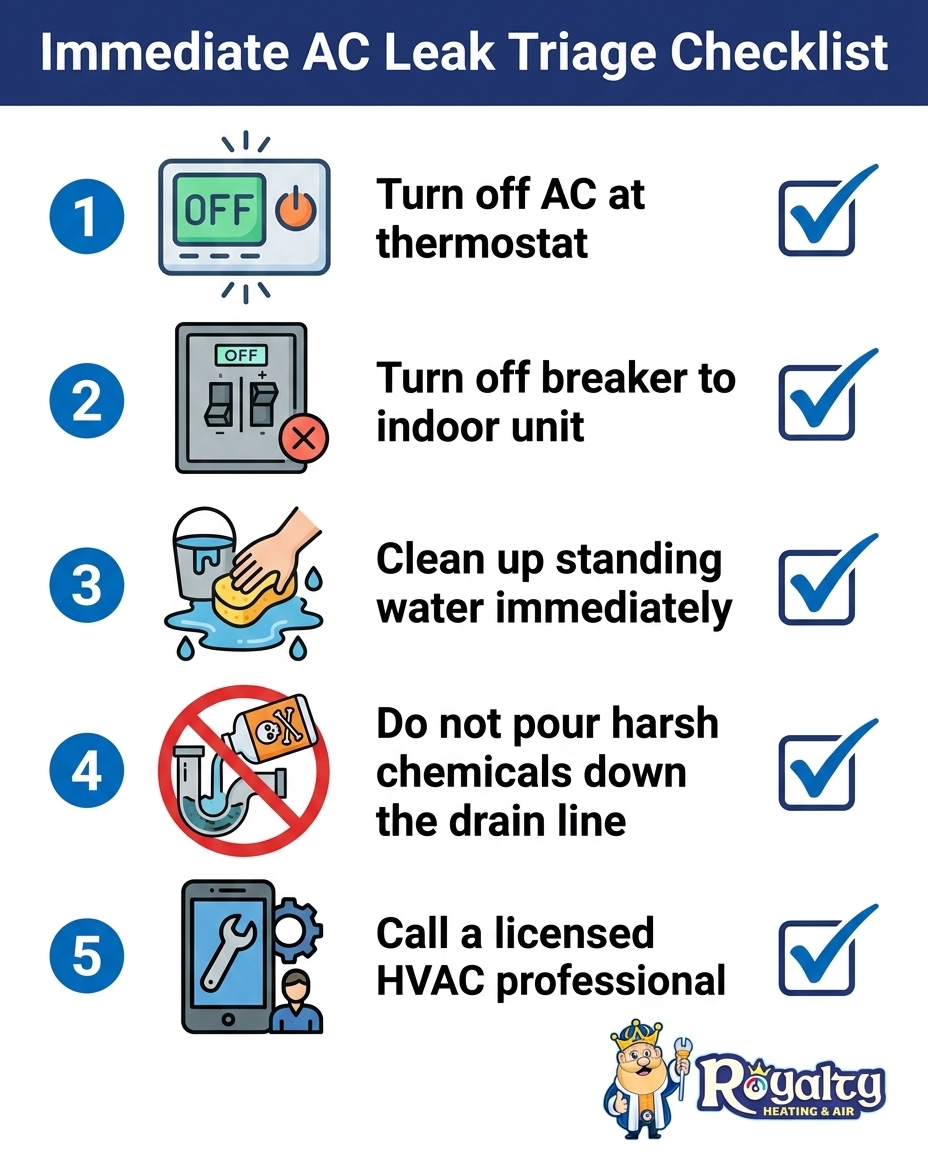
When you discover an active leak in late August, your first instinct might be to grab a bucket and start tearing into the machine. Stop. The most critical action you can take is to mitigate the water damage safely while waiting for a professional. Here is the exact protocol we recommend our customers follow to protect their homes.
1. Turn off the AC system immediately at the thermostat: The longer the unit runs, the more condensation it produces. Switching the thermostat to the "Off" position halts the cooling cycle and stops the flow of new water into the overflowing drain pan.
2. Turn off the breaker to the indoor unit: Water and electricity are a disastrous combination. Locate your home's electrical panel and flip the breaker that powers the indoor air handler to eliminate any risk of electrical shock or short-circuiting.
3. Clean up the standing water: Use highly absorbent towels, a mop, or a wet/dry shop vacuum to remove the standing water around the air handler. Act quickly to protect your flooring, subflooring, and nearby drywall from absorbing the moisture.
4. Do not attempt to dismantle the unit: Never try to take apart the air handler cabinet or pour harsh chemical drain cleaners down the condensate line. This can cause severe damage to delicate components and will likely void your manufacturer's warranty.
5. Call a professional for fast diagnostic service: Once the area is secure and the water is cleaned up, bring in a certified technician to locate the exact source of the blockage.
At Royalty Heating & Air, we provide fast, reliable diagnostic expertise to quickly resolve drainage issues before they cause costly indoor water damage. We know that when your home is compromised, you need a team that handles the situation comprehensively. For example, one local customer reached out when they needed a full AC unit replacement alongside additional fan and insulation work; our professional crew handled the complete system overhaul to ensure all their needs were met professionally. We bring that exact same level of thorough, meticulous care to every diagnostic call, ensuring your leak is stopped at the source.
While an algae-clogged condensate drain line is the undisputed heavyweight champion of late-summer leaks, it is not the only mechanical failure that can cause water to pool inside your home. When our technicians arrive on-site, we evaluate your system for several other potential culprits we frequently encounter in the field.
Your indoor unit contains an evaporator coil that absorbs heat from your home's air. If airflow is restricted—usually due to a severely clogged air filter—or if the system is running low on refrigerant, the temperature of that coil can plummet below freezing. The ambient moisture in the air then freezes directly onto the metal, creating a thick block of solid ice. When the system shuts off and that ice thaws rapidly, the resulting deluge of water easily overwhelms the drain pan, spilling over the sides.
The drain pan sits directly beneath the evaporator coil to catch the steady drip of normal condensation. Over time, older metal pans are highly susceptible to rust and corrosion. Even modern high-strength plastic pans can become brittle and crack due to years of age and extreme temperature fluctuations. If the pan itself is compromised, the water will leak straight through the bottom before it ever reaches the drain line. If you are curious about how moisture degrades metal components over time, understanding what causes AC evaporator coil corrosion sheds light on why we see these parts eventually fail.
The PVC pipe that carries water outside must maintain a slight, consistent downward slope. If the pipe gets bumped, settles improperly, or loses a supporting bracket, it can sag. Water pools in the sagging section, eventually backing up. Additionally, the joints connecting the PVC sections can loosen or break apart due to physical disruption, causing water to leak directly out of the broken seal.
Whether the issue is a cracked pan or a frozen coil, diagnosing the precise mechanical failure is essential for homeowners in Roseville CA to maintain a safe, dry home.
It can be tempting to lay down a few thick towels and ignore a slow drip, especially if the air conditioner is still managing to blow cold air. However, treating an indoor leak as a minor inconvenience is a dangerous gamble. Even a small amount of uncontrolled water can trigger a cascade of secondary problems throughout your home.
Based on our extensive field experience, here is the damage we typically see when a late-summer leak in August goes unaddressed:
• Structural Water Damage: Continuous dripping acts like a slow-motion wrecking ball. Water will quickly ruin drywall, turning it soft and crumbly. It warps expensive hardwood floors, soaks into carpeting, and—if your air handler is located in the attic—can severely damage ceiling joists and cause your living room ceiling to collapse.
• Mold and Mildew Growth: Standing water indoors creates a secondary breeding ground for mold spores. Within just 24 to 48 hours, mold can begin to colonize the damp areas around your air handler, degrading your indoor air quality and spreading a musty odor throughout the house.
• Electrical Hazards: Your air handler is packed with high-voltage electrical components, circuit boards, and blower motors. Water mixing with these components poses a significant safety risk, including the potential for electrical shorts, system-wide electrical failure, or even a fire hazard.
• Severe System Strain: A system struggling with a clogged drain or a frozen coil is running far less efficiently. It has to work twice as hard to cool your home, which drives up your monthly energy consumption and drastically increases the risk of premature compressor failure.
Addressing the leak immediately is the only way to protect both your property value and your HVAC investment.
When faced with a clogged drain line, a quick internet search will yield dozens of DIY tutorials suggesting you pour bleach down the pipe or jam a wire coat hanger into the plumbing. We strongly advise against these methods, and they are heavily discouraged by HVAC manufacturers for several critical reasons.
First, harsh chemicals like bleach can actually eat through the specialized PVC glue that holds your drain line together. Over time, this creates multiple new leak points behind your walls. Second, blindly pushing a wire hanger into the system can easily puncture delicate, expensive components like the evaporator coil.
Our technicians use specialized suction equipment, such as heavy-duty customized vacuums, to clear the entire length of the line without introducing damaging pressure or chemicals. We also apply safe, biological treatments that prevent algae from returning without degrading the plastic piping.
More importantly, our team will inspect your entire system to ensure the leak hasn't caused hidden electrical damage. We verify whether the issue is truly just an algae clog, or if a low refrigerant charge is causing the coils to freeze.
We prioritize rapid response because we know how stressful HVAC failures can be. During a past winter cold snap, one customer needed urgent heating assistance to avoid relying on space heaters; we offered to come out a day earlier than scheduled, saving them an extra night in the cold. We apply that exact same urgency to late-summer cooling emergencies in Roseville CA. When water is threatening your home, you need a team that arrives fast and fixes the problem correctly the first time.
Ultimately, the best defense against these issues is prevention. Investing in routine AC maintenance before the cooling season begins allows our technicians to clear out minor biological buildup before it hardens into a late-summer clog.
No, we recommend you immediately turn off the system at the thermostat. Continuing to run the air conditioner will only force the unit to produce more condensation, which will continue to overflow into your home. This worsens the active leak, significantly increasing the risk of severe structural water damage and potential electrical shorts. Keep the system powered down until a professional has cleared the blockage and verified it is safe to operate.
Yes, our team considers an indoor leak a property-damage emergency. While it is not typically life-threatening, it requires immediate action on your part to turn the system off and stop the flow of water. Prompt professional repair is highly recommended to restore your home's cooling capabilities quickly while preventing costly repairs to your drywall, flooring, and ceilings.
The most obvious sign of a clogged drain line is water actively pooling around the indoor air handler or dripping from your ceiling vents. You might also notice a completely full drain pan when you inspect the unit. Additionally, a musty smell coming from the vents or the system shutting down unexpectedly—which happens if your unit is equipped with an automatic float switch—are strong indicators of a backup.
In our experience, recurring clogs are usually due to persistent algae and mold growth that was never fully eradicated from the pipe. It can also be caused by an improperly sloped drain line that allows water to pool and stagnate rather than flowing outside. A lack of annual maintenance to clear minor biological buildup before it hardens is the most common reason we see homeowners experience repeated drainage failures by late August.
You should call a licensed HVAC professional immediately. Our technicians have the specialized diagnostic tools and expertise to safely determine the root cause of the leak. A professional can quickly identify whether the issue is a simple algae clog, a refrigerant leak causing frozen coils, or a physically cracked drain pan, ensuring the repair is handled safely and correctly.
Finding water pooling around your indoor air handler is a clear sign that your system needs immediate professional attention. Whether it is a simple algae clog brought on by the heavy cooling demands of August, or a more complex mechanical failure, ignoring the problem will only lead to extensive water damage and costly home repairs.
Remember, the absolute best first step you can take to protect your home is to turn off the unit at the thermostat and clean up the standing water. Do not let a minor drip escalate into a major renovation project.
If you are dealing with an unexpected indoor leak in Roseville CA, scheduling a professional inspection with Royalty Heating & Air is the safest way to clear the line, protect your property, and restore your home's comfort. By relying on expert diagnostics, you gain the peace of mind that your system is thoroughly repaired and ready to handle the rest of the summer heat.
