
Services
About
Service Areas


That metallic rattling from your utility closet isn't going away on its own, and if you are currently weighing a Gas Furnace vs Electric Heat Pump: A Roseville Cost Analysis, you already know your aging heating system is likely failing. When our technicians at Royalty Heating & Air perform routine pre-season checkups every September, a pattern we see often is homeowners discovering their older equipment is on its last legs. The impending cold weather forces a critical decision: stick with the traditional gas technology you have always known, or make the switch to a modern electric alternative. Making this choice requires looking far beyond the immediate replacement day and considering the long-term operational impact on your household.
Whether you are looking for traditional heating services or a modern heat pump installation, an informed decision balances your specific home comfort needs with regional energy trends. The September pre-heating season is the ideal window to evaluate these options, allowing you to proactively upgrade before winter demand spikes and emergency replacements become your only option.
Upgrading a home's climate control system often involves more than just swapping out a single box. Just recently, a Roseville homeowner reached out to our team for a winter system upgrade when they needed an AC unit replacement alongside the installation of a whole house fan and new insulation. By relying on our professional crew to handle the complex transition, all of their home performance needs were met seamlessly. This holistic approach to home comfort is exactly why evaluating the differences between gas and electric systems is so critical. You are not just buying a heater; you are investing in the long-term energy profile of your entire property.
Key factors to consider during a pre-season replacement:
• Current system age: Units over 15 years old are prime candidates for a proactive upgrade before a mid-winter breakdown.
• Ductwork condition: New high-efficiency systems require sealed, properly sized ductwork to deliver their rated performance.
• Electrical panel capacity: Transitioning from gas to electric may require an evaluation of your home's main electrical panel to ensure it can handle the load.
• Long-term plans: If you plan to stay in your home for the next decade, the operational efficiency of your new system will heavily impact your overall return on investment.
When discussing heating systems, context is everything. Traditional gas furnaces are engineered to produce overwhelming amounts of heat, making them the standard choice for regions that experience extreme, sustained freezing temperatures and frequent blizzards. However, the climate in Roseville, CA, paints a very different picture. Local winter lows typically hover in the upper 30s to low 40s. While certainly chilly enough to require reliable heating, these temperatures are well within the peak operating range for modern electric heating technology.
In our years servicing homes throughout Placer County, we find that Roseville's specific winter temperature averages eliminate the extreme cold drawback that older electric systems faced, giving homeowners a unique advantage. Electric systems do not have to work nearly as hard to extract ambient heat in mild winter climates. This climate compatibility directly impacts long-term operational efficiency, reducing the daily wear-and-tear on the equipment and extending its functional lifespan.
How the local climate benefits electric systems:
• Abundant ambient heat: Even at 40 degrees Fahrenheit, there is plenty of thermal energy in the outside air for a system to capture and move indoors.
• Reduced thermal shock: Mild winters mean the equipment does not undergo the extreme expansion and contraction cycles associated with sub-zero climates.
• Shorter peak heating seasons: Because the deep cold is relatively brief, systems spend more time operating in their highly efficient "cruising" zones.
• Lower operational stress: Moving heat in a moderate climate requires significantly less energy than generating heat through combustion.
For decades, a pervasive myth has circulated that electric heating systems are useless once the temperature drops near freezing. This misconception stems from older electric technology that relied on inefficient resistance heating or early-generation compressors that struggled below 40 degrees. Today, our team can confidently say that narrative is entirely outdated. Modern systems maintain high efficiency even when temperatures drop, making them ideal for Northern California's chilly but mild winters. Advanced variable-speed compressors and improved refrigerants allow these units to capture heat energy efficiently even when the thermometer dips below freezing, ensuring your home stays warm without the massive energy spikes associated with older technology.
Upfront installation is only one part of the financial equation; ongoing utility bills dictate your true long-term return on investment. When evaluating a conceptual cost analysis, it is vital to understand how different systems consume energy. Traditional gas units generate heat by burning fossil fuels. Even the most advanced gas units max out at just under 100% efficiency, meaning some energy is always lost in the combustion process. In contrast, air-source systems can deliver one-and-a-half to three times more heat energy to a home than the electrical energy they consume. Because they move existing heat rather than creating it from scratch, their efficiency can effectively exceed 100%.
Comparing local municipal electric rates against regional investor-owned gas rates often reveals operational savings over time. Because our team navigates local municipal utility rate structures daily, Royalty Heating & Air can provide transparent, localized ROI insights. Roseville Electric historically offers different rate structures than surrounding investor-owned utilities, which can significantly alter the long-term cost analysis in favor of electric appliances. If you are deciding when to replace your furnace, factoring in the declining efficiency of your existing older gas unit against these local rate structures is the most accurate way to project your future utility costs.
To truly grasp the efficiency differences, you have to look at how the industry measures performance. Gas units are measured by Annual Fuel Utilization Efficiency (AFUE). An 80% AFUE furnace turns 80% of its fuel into usable heat, while 20% escapes as exhaust. Electric systems are measured by Heating Seasonal Performance Factor (HSPF). Because they transfer heat, a high HSPF rating indicates that the system is multiplying the electrical energy it uses into a much larger amount of heating energy for your home.
• Primary Energy Source — Traditional Gas Furnace: Natural gas or propane (combustion) — Electric Heat Pump: Electricity (heat transfer)
• Efficiency Measurement — Traditional Gas Furnace: AFUE (Caps near 98%) — Electric Heat Pump: HSPF (Can exceed 100% effective efficiency)
• Climate Suitability — Traditional Gas Furnace: Excellent for extreme, sub-zero cold — Electric Heat Pump: Perfect for mild to chilly Northern CA winters
• Functionality — Traditional Gas Furnace: Heating only — Electric Heat Pump: Heating and cooling
• Carbon Footprint — Traditional Gas Furnace: Direct on-site emissions — Electric Heat Pump: Zero on-site emissions
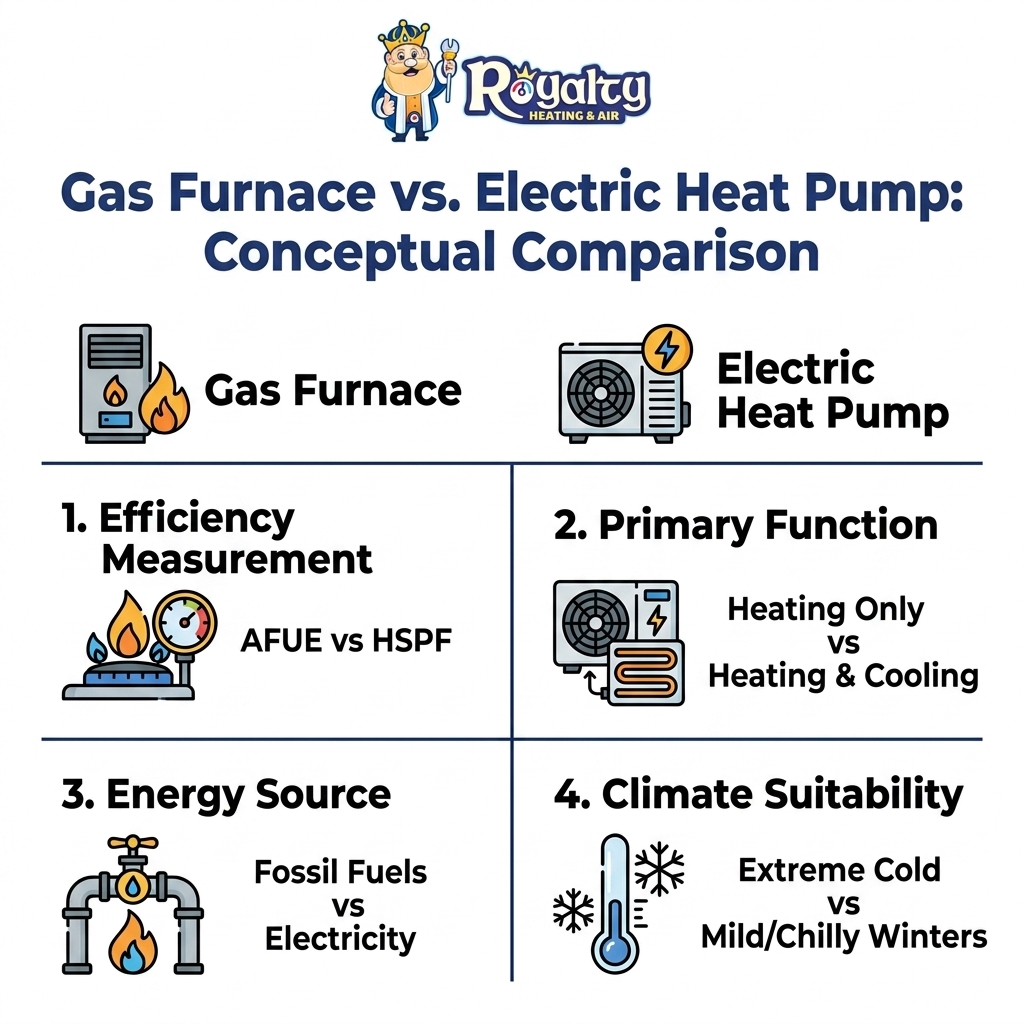
One of the most significant factors our technicians discuss in the gas versus electric debate is the concept of dual functionality. A traditional gas unit only handles winter heating, requiring a completely separate air conditioning unit to manage the summer heat. Electric heat pumps, however, are essentially air conditioners that can operate in reverse. During the hot summer months, they extract heat from inside your home and push it outdoors. When winter arrives, a reversing valve switches the flow of refrigerant, allowing the system to extract ambient heat from the outdoor air and pump it inside.
Because Roseville experiences notoriously hot summers, upgrading both your heating and cooling capabilities with a single dual-function unit offers tremendous value. Replacing a failing furnace might also be the perfect opportunity to upgrade an aging AC unit simultaneously, consolidating your HVAC equipment into one highly efficient system. When a local homeowner recently hired us to address both their heating and cooling needs, our installation crew executed a flawless setup that included thorough duct cleaning, resulting in optimal airflow and high efficiency year-round. This level of comprehensive performance is standard when transitioning to modern dual-function technology.
The benefits of consolidating your HVAC system:
• Streamlined maintenance: Caring for one unified system is generally simpler than maintaining two entirely separate pieces of equipment with different lifespans.
• Consistent air quality: A single, high-efficiency air handler continuously filters and circulates your indoor air throughout all four seasons.
• Space savings: Eliminating the need for a bulky indoor furnace cabinet can free up valuable square footage in your utility closet or garage.
• Zoning capabilities: For homes with specific comfort needs or additions, ductless mini split systems offer targeted temperature control year-round without the need for extensive ductwork.
Beyond personal comfort and utility bills, Roseville homeowners must also consider the broader regulatory environment. California is actively pursuing aggressive decarbonization goals, and state building codes—such as Title 24 energy initiatives—strongly encourage the transition to electric appliances. As the state moves away from fossil fuel dependence, investing in a new gas furnace means installing technology that runs counter to California's long-term energy strategy. We advise our clients that upgrading to an electric system aligns a home with future energy standards, potentially increasing the property's appeal to eco-conscious buyers down the line.
To ease this transition, we always remind our customers that various generic federal tax credits and local utility rebates may apply to qualifying high-efficiency installations. While these programs evolve frequently, they are designed to offset the initial investment of moving to cleaner technology. Because generic incentives change based on municipal funding and state legislation, homeowners should always consult with a tax professional or their utility provider to verify current incentive programs before making a final decision.
Investing in electric technology today prevents a decades-long reliance on fossil fuels as state regulations inevitably evolve. By adopting clean energy solutions now, you insulate your household from potential future restrictions on natural gas hookups or fluctuating fossil fuel commodity prices. Furthermore, modern electric systems often feature advanced smart technology integration. These intelligent thermostats and variable-speed air handlers communicate constantly, optimizing energy management minute by minute to deliver the exact amount of heating or cooling required—no more, no less.
Regardless of whether you ultimately choose a high-efficiency gas unit or a modern electric alternative, the technology is only as good as the team installing it. Professional installation is absolutely critical for achieving the manufacturer's rated efficiencies. A system that is improperly sized, poorly calibrated, or connected to leaky ductwork will waste energy and fail prematurely, completely negating any potential ROI you calculated during the decision process. Partnering with a reliable local team like Royalty Heating & Air ensures that the installation is executed flawlessly, protecting your home and your wallet.
During a recent early-autumn service appointment, our technicians encountered an HVAC system in rough shape, requiring them to navigate several unexpected structural obstacles. By working professionally and collaboratively, our team overcame the challenges, rejuvenated the system, and advised the family on their future replacement options, leaving the customer thoroughly satisfied. This level of dedication is essential during the September pre-heating season. Routine tune-ups ensure the system operates safely and effectively before heavy winter use begins. Ongoing care prevents premature wear, catches minor issues before they become catastrophic failures, and protects the manufacturer's warranty. Enrolling in comprehensive HVAC maintenance plans is the smartest way to guarantee that your new investment delivers reliable comfort for years to come.
Is a heat pump better than a gas furnace in California?
For many California homes, our team finds a heat pump is highly advantageous due to the state's mild winters and push for decarbonization. Because they transfer heat rather than generating it via combustion, they offer exceptional energy efficiency in moderate climates. Additionally, they provide both heating and cooling in a single unit, which is perfect for regions with hot summers and chilly winters.
Are heat pumps cheaper to run than gas furnaces?
In many cases, yes, because they can deliver significantly more heat energy than the electrical energy they consume. The exact operational savings depend heavily on your local municipal electric rates compared to regional gas rates. By moving heat rather than burning fuel, high-efficiency models often lower monthly utility bills over the long term.
At what temperature does a heat pump become inefficient in Northern California?
Modern cold-climate systems maintain high efficiency even when temperatures drop below freezing. While older technology struggled below 40 degrees, today's variable-speed compressors can effectively extract ambient heat well into the 20s and below. Since Northern California winters rarely sustain extreme sub-zero temperatures, efficiency loss is rarely a concern.
Is it worth switching from gas to electric heat in California?
Switching is often worth it when factoring in state-wide energy goals, potential generic tax credits, and long-term operational efficiency. Transitioning aligns your home with California's building codes and reduces your carbon footprint. It also future-proofs your property against potential future restrictions on fossil fuel appliances.
How long does it take to see an ROI when switching to an electric heating system?
The return on investment timeline varies based on your home's insulation, local utility rates, and the specific efficiency rating of the new unit. However, homeowners often see immediate reductions in energy usage, and various generic rebates can shorten the payback period. A professional evaluation from our team can provide a conceptual timeline based on your specific household energy consumption.
Making the right choice for your home requires a clear understanding of how local weather and utility rates impact performance. By evaluating the pros and cons of gas versus electric systems for Roseville's specific climate, you can invest in a solution that provides long-term efficiency, year-round comfort, and absolute peace of mind before the winter chill sets in.
