
Services
About
Service Areas


Is an HVAC maintenance plan worth it for most homeowners? The short answer is: yes, in most cases — but it depends on your system's age, how your equipment has been cared for, and what the plan actually covers.
Here is a quick breakdown to help you decide:
• Older systems (5+ years): Plans tend to deliver strong value through early problem detection, priority scheduling, and helping protect remaining manufacturer warranty coverage
• Newer systems (under 3 years): Plans can still be worthwhile to protect your warranty and prevent efficiency loss from dust buildup, even if breakdowns are less likely
• DIY-capable homeowners: Basic tasks like filter changes are easy to do yourself, but professional diagnostics, refrigerant checks, and electrical inspections require certified technicians
• Roseville's climate: Hot summers and seasonal temperature swings put real stress on HVAC equipment, making regular tune-ups more valuable here than in milder regions
• Systems nearing end of life (15+ years): A plan may make less financial sense if replacement is the more practical next step
Most HVAC systems don't warn you before they fail — they simply stop working, usually on the hottest afternoon in August or the coldest night in January. That timing is rarely a coincidence. It happens because seasonal demand pushes already-stressed equipment past its limits. Preventive maintenance is designed to catch those stress points before they become emergencies, keeping your home comfortable year-round and your system running efficiently for as long as possible.
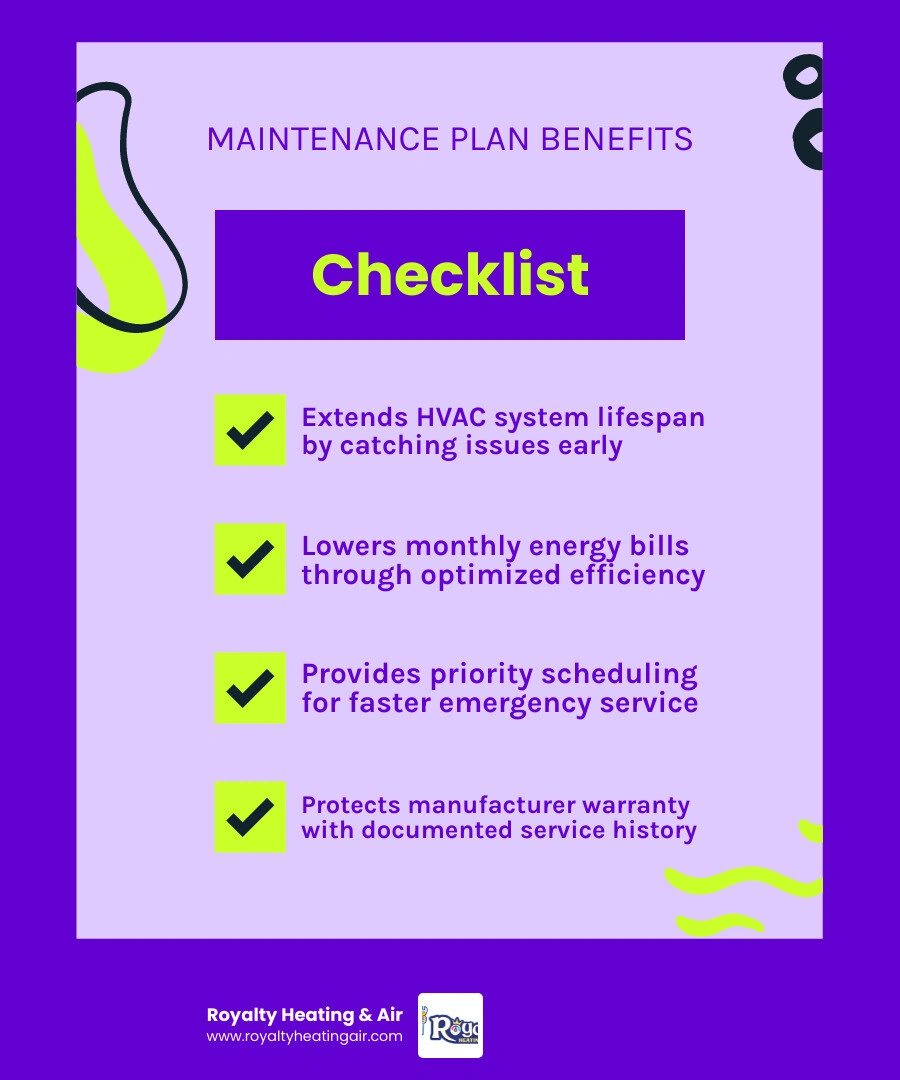
When you look at your household budget, it is completely natural to question every recurring subscription or service agreement. You might wonder if a service agreement is a genuine safeguard for your comfort or just an unnecessary add-on. To truly evaluate if the investment makes sense, we have to look at the real-world math of system longevity, energy efficiency, and emergency protection.
In our local area—stretching from Roseville and Rocklin to Loomis and Granite Bay—our heating and cooling systems work incredibly hard. During our blistering summer months, an air conditioner is not a luxury; it is a necessity. A neglected system has to work twice as hard to pull heat out of your home, which directly leads to higher utility bills and a significantly shorter operational lifespan.
While a neglected system might only survive 10 to 12 years, a professionally maintained system frequently reaches 15 to 20 years of reliable service. When you spread the cost of system replacement over those extra years, the financial benefit of regular care becomes incredibly clear.
Beyond extending your system's life, there is the immediate benefit of energy efficiency. Even a thin layer of dust on your coils can reduce your system's efficiency by 10% to 25%. Over a long, hot summer, that drop in efficiency translates directly into wasted money on your monthly energy bills.
Finally, we cannot overlook the value of priority scheduling. When temperatures spike in Placer County, local HVAC companies quickly face massive backlogs of emergency calls. If your system breaks down during a heatwave and you do not have a plan, you could find yourself waiting days in an uncomfortably hot house. Plan members bypass the general queue, securing fast, priority service when they need it most. For a deeper look into how these benefits protect your home, you can read our ac maintenance plan complete guide or explore these hvac maintenance plans tips homeowners use to maximize their savings.
A comprehensive maintenance plan is much more than a quick visual inspection and a filter swap. A true professional tune-up is a detailed, highly technical process designed to optimize every single component of your heating and cooling systems.

During a standard maintenance visit, a certified technician will focus on several critical areas of your equipment:
• Electrical Connections: Technicians measure voltage and test electrical connections. Loose or frayed wires can cause system failures, short circuits, or even safety hazards.
• Capacitor and Contactor Testing: Capacitors act like temporary batteries that help your system start up. Testing their electrical output allows us to replace weakening capacitors before they fail and cause expensive damage to your compressor or fan motor.
• Thermostat Calibration: We verify that your thermostat is reading the indoor temperature accurately so your system doesn't run longer than necessary.
• Coil Cleaning: Cleaning both the indoor evaporator coil and the outdoor condenser coil ensures optimal heat transfer, keeping your home cooler while using less energy.
• Condensate Line Flushing: Algae and debris can easily clog your air conditioner's condensate drain line. Flushing this line prevents water from backing up and causing catastrophic water damage to your ceilings or floors.
• Refrigerant Charge Verification: We check that your system has the exact amount of refrigerant specified by the manufacturer. Incorrect levels can destroy your compressor and cause your system to freeze up.
To help you prepare your home for the changing seasons, we have put together a guide on spring ac and hvac maintenance for the sacramento area to walk you through exactly what your system needs before the summer heat arrives.
Many homeowners fall into the trap of "reactive maintenance"—only calling a technician when the system stops blowing cold or warm air. While this might seem like a way to save money upfront, it almost always ends up costing much more in the long run.
Reactive repairs are stressful, unpredictable, and often happen at the worst possible moments. When a system is left to run without regular care, minor issues like a dirty coil or a weak capacitor quickly snowball into major emergencies. For example, a clogged filter restricts airflow, which causes the evaporator coil to freeze, which then forces the compressor to work under extreme pressure until it ultimately fails.
By contrast, proactive maintenance is all about predictable, scheduled care. It allows us to catch small, inexpensive problems during a routine visit before they turn into major system failures. Additionally, keeping your system in peak condition preserves your manufacturer's warranty, which can save you from paying out of pocket for major components if something does go wrong.
To help you compare these two approaches, we have outlined the key differences below:
• Scheduling — Proactive Maintenance Plan: Scheduled ahead of time during mild spring or fall weather — Reactive Repairs: Emergency calls during peak summer or winter
• System Lifespan — Proactive Maintenance Plan: Maximized (often reaching 15–20 years) — Reactive Repairs: Shortened (frequently failing around 10–12 years)
• Energy Bills — Proactive Maintenance Plan: Kept as low as possible through optimal efficiency — Reactive Repairs: Gradually increase as dust and wear strain the system
• Repair Costs — Proactive Maintenance Plan: Highly predictable; minor parts replaced early — Reactive Repairs: Unpredictable and often very expensive
• Warranty Protection — Proactive Maintenance Plan: Fully preserved with documented annual service — Reactive Repairs: Risk of voiding manufacturer parts warranty
• Peace of Mind — Proactive Maintenance Plan: High; you know your system is safe and ready — Reactive Repairs: Low; constantly worrying about a sudden breakdown
If you want to dive deeper into avoiding unexpected breakdowns, check out our guide on how to prevent hvac emergencies with maintenance. If you are currently dealing with an older system and trying to decide your next step, our breakdown of when to repair vs replace your hvac system can help you make an informed choice.
There is a lot of great home maintenance advice out there, and many homeowners love taking care of their properties themselves. While we highly encourage homeowners to handle basic upkeep, it is important to understand where DIY tasks should end and professional service must begin.
Homeowners can easily manage basic tasks like replacing air filters every one to three months and keeping weeds, leaves, and debris cleared at least two feet away from the outdoor condenser unit. These simple habits keep airflow moving freely and prevent early strain on your system.
However, the inner workings of an HVAC system involve high-voltage electricity, complex refrigeration chemistry, and specialized diagnostic tools. Handling refrigerant requires EPA certification by law, and working with electrical components carries real safety hazards. Furthermore, inspecting a gas furnace's heat exchanger for invisible, deadly carbon monoxide cracks requires professional training and specialized combustion analysis equipment.
If you live in our local communities, we have tailored guides to help you understand your system's specific needs. Read our guide to ultimate hvac maintenance granite bay ca for localized tips, or schedule a professional hvac system evaluation to get a clear, data-driven picture of your equipment's current health.
As your heating and cooling system ages, it naturally experiences wear and tear. For systems that are five years or older, an HVAC maintenance plan becomes an invaluable tool for predictive tracking.
During our visits, we monitor the electrical amp draw of your motors and the operating pressures of your refrigerant. By tracking these numbers over time, we can spot a motor that is starting to struggle or a tiny refrigerant leak before it causes a complete system shutdown.
Older systems also suffer from reduced airflow due to years of dust accumulation in hard-to-reach places. Regular professional cleaning optimizes this airflow, reducing the strain on aging components and helping you squeeze every possible year of life out of your investment.
You might think a brand-new heating and cooling system doesn't need a maintenance plan. After all, it's running perfectly and has a manufacturer's warranty. However, this is actually one of the most critical times to have a plan.
Almost every major HVAC manufacturer—including Carrier, Trane, and Lennox—requires documented annual professional maintenance to keep their 10-year parts warranties valid. If a major component fails five years from now and you cannot provide proof of yearly professional service, the manufacturer may deny your warranty claim, leaving you to pay for the part out of pocket.
Additionally, even a new system can lose efficiency quickly in our dusty dry seasons. Protecting your investment from day one prevents early efficiency loss and ensures your system is installed and maintained to the highest standards.
We hear many of the same questions from homeowners in Roseville, Rocklin, and Lincoln. Here are clear, straightforward answers to help you make the best decision for your home.
We recommend professional service twice a year: once in the spring to prepare your air conditioner for the summer heat, and once in the fall to ensure your furnace or heating system is safe and ready for the winter.
Our local climate brings dramatic seasonal temperature swings. Preparing your system before these extreme weather shifts ensures it can handle the workload safely and efficiently.
Yes, in many cases it will. Manufacturer warranties are designed to cover defects in parts, not failures caused by neglect. If you skip professional maintenance and a major component like a compressor or heat exchanger fails, the manufacturer will often ask for service records before approving the replacement part. Regular, documented service history is your insurance policy for your warranty.
You can easily handle the following tasks to keep your system happy between professional visits:
• Change your air filters every 1 to 3 months (more often if you have pets or allergies).
• Keep the outdoor unit clear of shrubs, grass, leaves, and debris (maintain a 2-foot clearance).
• Ensure your indoor return vents and supply registers are clean and unblocked by furniture or drapes.
• Perform quick visual inspections of your outdoor unit to check for any frayed wires or damaged insulation.
At Royalty Heating & Air, we believe in providing honest, high-quality comfort protection to our neighbors in Roseville, CA, Rocklin, CA, Loomis, CA, Lincoln, CA, and Granite Bay, CA. We treat your home with the care and respect it deserves, ensuring your heating and cooling systems run safely, reliably, and efficiently all year long.
But our passion goes far beyond keeping your home comfortable. We are incredibly proud of our partnership with the MackAttack Foundation, which allows us to support foster babies and sponsor family adoptions right here in our community. When you choose us to care for your home, you are also helping us bring hope and love to children and families in need.
If you want to protect your home's comfort, save on utility bills, and enjoy complete peace of mind, we invite you to explore our maintenance plans or reach out to our friendly team today!
