
Services
About
Service Areas


What does an HVAC maintenance plan include is one of the most common questions homeowners ask before signing up for a service agreement — and it's a smart question to ask. Here's a quick breakdown of what a standard plan covers:
• Thermostat calibration — verified for accurate temperature control
• Electrical connections — inspected and tightened to prevent failures
• Evaporator and condenser coil cleaning — removes buildup that reduces efficiency
• Refrigerant level check — protects the compressor from damage
• Condensate drain line flushing — prevents clogs, water damage, and mold
• Blower motor inspection — ensures proper airflow throughout your home
• Air filter inspection or replacement — improves air quality and system performance
• Heat exchanger inspection — catches cracks that can lead to carbon monoxide leaks
• Carbon monoxide and safety testing — protects your household
• Lubrication of moving parts — reduces wear and tear
• Ductwork visual inspection — identifies air loss that drives up energy bills
Think of it like a dental cleaning or an oil change — regular, preventative care that keeps a bigger problem from sneaking up on you at the worst possible moment. Heating and cooling account for roughly 52% of a typical household's annual energy use, and a poorly maintained system can consume 15% or more energy than a well-tuned one. For busy Roseville homeowners, a maintenance plan is one of the simplest ways to protect that investment without having to think about it.
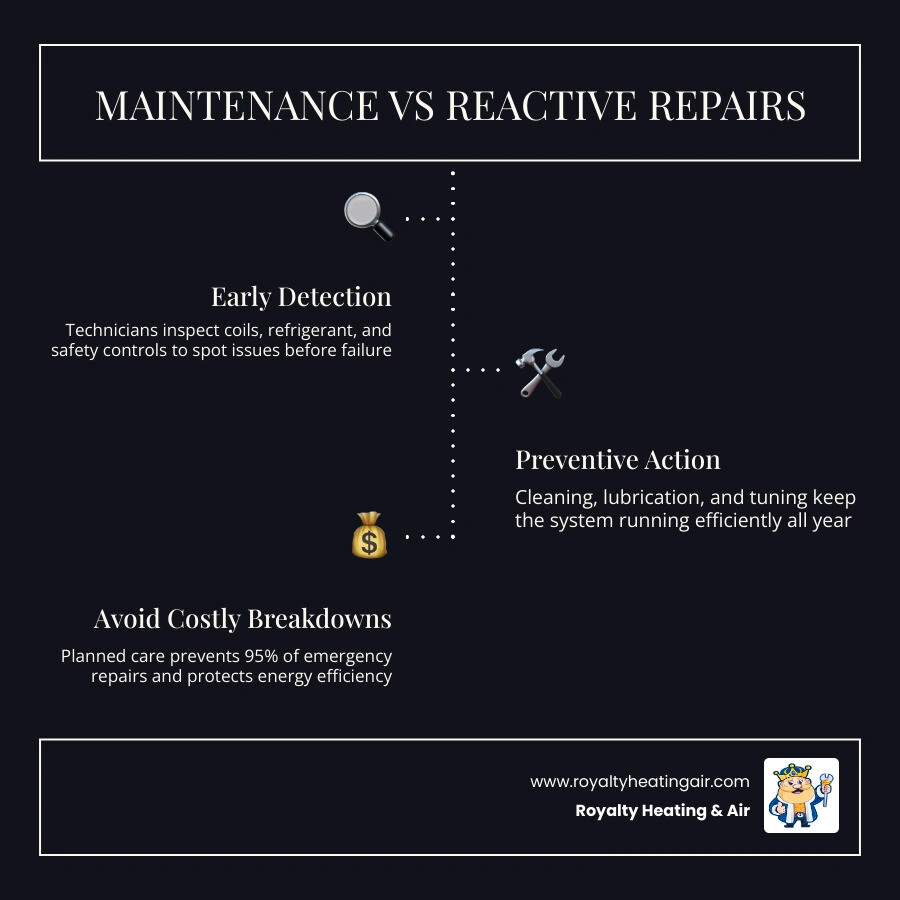
An HVAC maintenance plan is a scheduled service agreement that helps keep your heating and cooling system in good working condition year-round. Instead of waiting until the AC quits during a Roseville heat wave or the furnace acts up on a cold morning, the plan focuses on catching issues early.
In simple terms, it is proactive care rather than reactive repair.
A regular one-time service call usually happens because something is already wrong. A maintenance plan, on the other hand, is built around planned visits, seasonal inspections, tune-ups, cleaning, performance checks, and safety testing. Many homeowners also like that these plans often come with convenience perks such as service reminders, documented maintenance history, and priority scheduling.
You can learn more about Royalty Heating & Air's HVAC Maintenance Plans if you want to see how an ongoing service agreement works in real life.
Here is the difference at a glance:
• Usually happens after a breakdown — HVAC Maintenance Plan: Scheduled before peak seasons
• Focuses on fixing a problem — HVAC Maintenance Plan: Focuses on preventing problems
• May not include full system tune-up — HVAC Maintenance Plan: Typically includes routine inspections and tune-ups
• Less predictable timing — HVAC Maintenance Plan: Planned spring and fall visits
• No ongoing maintenance record — HVAC Maintenance Plan: Ongoing service history and reminders
That difference matters because many HVAC problems start small. A clogged drain line, weak capacitor, dirty coil, loose wire, or airflow issue may not seem dramatic at first, but those are the kinds of problems that can snowball into bigger repairs if nobody catches them early.
Most residential plans include a multi-point inspection of the system's major components, plus basic cleaning and performance testing. While exact checklists vary by equipment type, a standard home maintenance visit usually includes:
• Thermostat inspection and calibration
• Air filter inspection and replacement if needed
• Electrical connection inspection and tightening
• Voltage and amp draw checks on key components
• Lubrication of moving parts where applicable
• Blower assembly inspection
• Safety control testing
• Condensate drain inspection and cleaning
• Coil inspection and cleaning
• Refrigerant level and pressure check for AC systems
• Combustion and safety checks for heating systems
• Visual ductwork inspection for leaks, damage, or airflow problems
For many homes in Roseville, Rocklin, Lincoln, Loomis, and Granite Bay, this kind of maintenance is especially valuable because HVAC systems often run hard through long cooling seasons and still need reliable heating when temperatures drop.
If you want a deeper overview, our AC Maintenance Plan Complete Guide and HVAC Maintenance Plans Tips Homeowners break down what homeowners should expect.
A good maintenance visit is not just someone glancing at the unit, tapping a panel, and declaring it "looks great." It should be systematic. The goal is to improve efficiency, reduce wear, spot safety concerns, and give you a clear picture of your system's condition.
For the cooling side of your system, a professional maintenance visit usually includes several AC-specific tasks designed to improve efficiency and reduce breakdown risk before summer arrives.
Typical cooling checklist items include:
• Checking thermostat operation in cooling mode
• Inspecting evaporator coil condition
• Cleaning condenser coils
• Checking refrigerant levels and operating pressures
• Looking for signs of refrigerant leaks
• Flushing the condensate drain line
• Cleaning the drain pan if accessible
• Inspecting the blower motor and wheel
• Testing capacitor and contactor performance
• Checking compressor operation
• Inspecting outdoor fan motor condition
• Confirming the outdoor unit has proper clearance for airflow
That last point is more important than many homeowners realize. Shrubs, weeds, leaves, and debris around the outdoor unit can choke airflow and make the system work harder than it should. Keeping at least a couple feet of clearance around the condenser is one of the easiest homeowner maintenance steps.
This type of preseason service helps prevent common warm-weather problems such as:
• Frozen evaporator coils
• Weak airflow
• Water leaks from clogged drains
• Short cycling
• Higher energy bills
• Poor cooling performance during extreme heat
For a seasonal refresher, see our guide to Spring AC and HVAC Maintenance.
Heating maintenance focuses more heavily on safety, combustion performance, and reliable startup before colder weather sets in.
For furnace systems, common maintenance tasks include:
• Testing thermostat operation in heating mode
• Inspecting the ignition system
• Checking burner operation and flame quality
• Cleaning burners if needed
• Inspecting the blower motor and airflow
• Inspecting the heat exchanger for visible signs of damage
• Checking gas pressure where applicable
• Testing safety controls and limit switches
• Inspecting electrical connections
• Measuring temperature rise
• Inspecting the flue or vent pipe
• Performing carbon monoxide and combustion safety checks
• Replacing or checking the air filter
These inspections matter because furnace issues are not always just comfort issues. Some are safety issues. A cracked heat exchanger, venting problem, or combustion issue can lead to carbon monoxide concerns, which is one reason professional heating maintenance is worth taking seriously.
Routine furnace care can also help prevent:
• Hard starts or failed ignition
• Uneven heating
• Strange burning smells
• Excessive dust
• System shutdowns
• Safety switch trips
For more details, read our Annual Furnace Maintenance Guide.
Preventative maintenance is not exciting in the way a brand-new system is exciting. But it is often the more practical hero of the story.
Here are the biggest long-term benefits.
1. Better energy efficiency
A dirty or poorly maintained HVAC system can increase energy use by 15% or more. Since heating and cooling make up roughly 52% of a typical household's annual energy use, even modest efficiency improvements can make a noticeable difference in monthly utility bills.
2. Longer equipment life
Well-maintained HVAC systems generally last longer than neglected ones. Many systems are designed to run for about 10 to 15 years with proper care, and regular service helps reduce the strain caused by dirty coils, restricted airflow, and worn components.
3. Fewer surprise breakdowns
Maintenance will not magically make parts immortal. If only. But it does improve the odds of catching worn components before they fail at the worst possible time.
4. Improved indoor air quality
Indoor pollutant levels are often 2 to 5 times higher than outdoor levels. Filter checks, airflow improvements, cleaning, and inspection of system buildup can help reduce the circulation of dust and other contaminants.
5. More consistent comfort
A tuned system is more likely to deliver even airflow, better temperature control, and steadier humidity performance.
6. Early detection of duct and airflow issues
Typical homes can lose 20% to 30% of conditioned air through duct leaks, holes, and poorly connected joints. A visual duct inspection during maintenance can help flag problems that waste energy and reduce comfort.
7. Better documentation for system care
Documented maintenance history can be helpful for tracking recurring issues, understanding system condition, and supporting warranty-related requirements where applicable.
If your goal is to reduce the chances of a stressful mid-season breakdown, our article on How to Prevent HVAC Emergencies with Maintenance is a useful next step.
For most homeowners in Roseville and nearby communities, the best schedule is twice a year:
• Once in spring before cooling season
• Once in fall before heating season
That bi-annual approach works well for systems with both AC and furnace components, and it is also a strong fit for many heat pump systems because they work year-round.
Why twice yearly? Because preseason maintenance gives us a chance to inspect, clean, and test the system before it enters its busiest stretch. It is much easier to address a weak part in spring than in the middle of the first major heat wave.
In our local service areas such as Granite Bay, Loomis, Lincoln, and Rocklin, summer cooling demand can be significant. That puts extra importance on spring tune-ups for AC performance, airflow, and drain line function. You can also explore our local perspective in the Ultimate HVAC Maintenance Granite Bay CA article.
Between professional visits, homeowners should still handle a few basic tasks:
• Change the HVAC air filter every 1 to 3 months depending on filter type, pets, allergies, and system use
• Keep return air vents clear of rugs, furniture, and clutter
• Keep plants, leaves, and debris away from the outdoor unit
• Watch for warning signs such as unusual noises, uneven temperatures, short cycling, or rising energy bills
Homes with pets, allergy concerns, or heavier system usage may need more frequent filter checks. A good rule of thumb is to inspect the filter monthly and replace it when dirty rather than waiting for it to become a dust collection hobby.
Not all maintenance plans are exactly the same, so it helps to compare the details before enrolling.
Here is what we recommend looking for:
For most homes in our area, this is the baseline. If a plan does not include spring and fall service, it may not provide the level of preventative care most homeowners need.
Ask what is actually included. A quality plan should clearly spell out the maintenance tasks performed on your AC, furnace, or heat pump. Vague promises are not nearly as helpful as a specific checklist.
You should know what was checked, what was cleaned, what is wearing down, and what may need attention later. Good records help you make smarter decisions instead of guessing.
This is one of the practical perks many homeowners appreciate most. When the weather gets extreme, being part of an ongoing maintenance agreement can help reduce the stress of waiting in line behind everyone whose system picked the same dramatic day to quit.
Some agreements include added value such as service benefits or repair-related advantages. The important thing is to understand what is included and what is not.
A newer split system, older furnace, heat pump, or dual-fuel setup may not all need the exact same maintenance approach. The plan should match your actual equipment and household needs.
A maintenance plan is designed for tune-ups, inspections, and prevention. It is not the same thing as full repair coverage, a home warranty, or a promise that no component will ever fail.
If you are comparing options, the best plans are usually the ones that are transparent, thorough, and easy to understand.
Yes, some of them.
Homeowners can usually handle basic upkeep such as:
• Changing air filters
• Keeping vents open and unobstructed
• Clearing debris around the outdoor unit
• Watching for ice buildup, unusual noises, or water around the system
• Replacing thermostat batteries when needed
But anything involving internal electrical components, refrigerant, combustion checks, or opening up the equipment should be handled by a professional. Those tasks require the right tools, testing procedures, and safety precautions.
No. Maintenance reduces risk, but it does not eliminate it.
Parts can still fail from age, wear, manufacturing defects, power surges, or heavy seasonal demand. What a plan does is improve your chances of catching many issues early, before they become expensive emergencies. Think "fewer surprises," not "magic shield."
Warranty terms vary, so homeowners should always check the specific documentation for their equipment. In many cases, keeping records of professional maintenance is a smart move and may be important for meeting warranty expectations.
Even when it is not explicitly required, regular documented maintenance helps show that the system has been properly cared for and can support better long-term performance.
An HVAC maintenance plan is really about staying ahead of trouble. When homeowners ask what does an HVAC maintenance plan include, the short answer is this: routine inspections, cleaning, testing, safety checks, and seasonal tune-ups that help keep your system efficient, reliable, and ready for the weather ahead.
For homeowners in Roseville, Rocklin, Lincoln, Loomis, and Granite Bay, preventative service is one of the simplest ways to protect comfort, energy efficiency, and indoor air quality without waiting for something to break first.
At Royalty Heating & Air, we believe home comfort should come with peace of mind. We are proud to serve our local communities while supporting a bigger mission through our partnership with the MackAttack Foundation, helping foster babies and sponsoring family adoptions.
If you are ready to make HVAC care easier, sign up for a professional HVAC Maintenance Plan.

