
Services
About
Service Areas


What does an HVAC maintenance visit include? Here's a quick answer:
• Air filter inspection and replacement
• Thermostat calibration and testing
• Electrical connections inspection and tightening
• Evaporator and condenser coil cleaning
• Refrigerant level check
• Condensate drain flushing
• Blower motor and airflow evaluation
• Heat exchanger inspection
• Burner assembly and gas pressure check
• Carbon monoxide and safety control testing
• Overall system performance test and reporting
Most homeowners don't think about their HVAC system until something stops working — usually on the hottest day in July or the coldest night in January. By that point, what could have been a simple fix during a routine visit has often turned into an expensive emergency repair. In Roseville, where summers regularly push past 100°F and winters demand a reliable furnace, that kind of breakdown isn't just uncomfortable — it's a real problem. Understanding what a professional maintenance visit actually covers helps you know what you're paying for, what to expect from your technician, and how to keep your system running strong all year long.
What does an hvac maintenance visit include basics:
• how often should you service your hvac
• hvac maintenance frequency for the sacramento area homes
A thorough HVAC maintenance visit is far more than a quick glance at your outdoor unit and a friendly wave goodbye. When a professional technician arrives at your home in Rocklin or Granite Bay, they perform a comprehensive multi-point inspection designed to evaluate every mechanical, electrical, and physical component of your heating and cooling system.
Think of this visit like an annual physical for your home’s comfort system. The technician’s goal is to optimize performance, clean up dirty components that force the system to work harder, calibrate controls for maximum energy efficiency, and identify minor wear-and-tear issues before they spiral into catastrophic failures. To understand the depth of this process for your cooling system, you can explore our detailed AC Maintenance Roseville CA Guide.
A genuine maintenance visit focuses on three core pillars:
• Deep Cleaning: Removing dust, pollen, and debris that act as insulators on coils and restrict airflow.
• Electrical and Mechanical Calibration: Testing electrical currents, tightening loose terminals, and lubricating moving parts to minimize friction.
• Safety and Integrity Testing: Checking for carbon monoxide leaks, verifying gas connections, and testing automatic safety shut-off controls.
If a service visit takes less than 45 minutes and doesn't involve opening up the air handler or testing the electrical components with a multimeter, you aren't getting a true maintenance service; you're getting a visual checkup. A thorough tune-up typically takes 60 to 90 minutes per system to complete properly.
When we perform a cooling-specific tune-up—ideally in the spring before the intense Sacramento Valley heat takes hold—our focus shifts to heat transfer and airflow. Air conditioners work by extracting heat from inside your home and releasing it outdoors. Anything that gets in the way of this process forces your system to run longer, spiking your energy bills.
• Evaporator and Condenser Coil Cleaning: Over the year, outdoor condenser coils collect dirt, grass clippings, and leaves, while indoor evaporator coils gather fine dust. This dirt acts as an insulating blanket, preventing heat from escaping. Cleaning these coils restores optimal heat transfer.
• Refrigerant Level Check: Refrigerant does not get "used up" like fuel. If your system is low on refrigerant, it means there is a leak. We measure the operating pressures and temperatures to ensure the charge is exactly where the manufacturer specified.
• Condensate Drain Flushing: Your air conditioner naturally pulls humidity out of the air. This moisture collects in a drain pan and flows out of your home. If this line gets clogged with algae or dust, it can back up, causing severe water damage to your ceilings or flooring. We flush these lines to ensure they flow freely.
• Compressor Performance Testing: The compressor is the heart of your AC. We measure its electrical draw (amperage and voltage) to make sure it isn't pulling too much power, which is a classic sign of mechanical strain.
• Blower Motor and Fan Inspection: We inspect the blower wheel and motor, lubricating moving parts if they aren't permanently sealed, to ensure air circulates efficiently through your ductwork.
As the autumn leaves start to fall in Loomis and Lincoln, it’s time to shift focus to your heating system. Heating maintenance is unique because it isn't just about comfort and efficiency; it is heavily focused on safety. Whether you have a gas furnace or a modern heat pump, we inspect the components that keep your family warm and safe. For a deeper look into this process, check out our Annual Furnace Maintenance Guide.
• Heat Exchanger Inspection: In a gas furnace, the heat exchanger is the metal chamber where gas is burned to create heat. If this metal cracks due to years of expanding and contracting, dangerous combustion gases—including carbon monoxide—can leak directly into your home’s breathing air. We use specialized cameras to inspect every inch of the heat exchanger for hairline cracks.
• Burner Assembly Cleaning: Dirty burners can lead to poor combustion, soot buildup, and uneven heating. We clean the burner ports to ensure a clean, blue flame.
• Gas Pressure and Connections Check: We verify that gas lines are sealed tightly and that the gas valve is delivering the exact pressure required for safe and efficient combustion.
• Carbon Monoxide Testing: We run the heating system and use sensitive digital equipment to test the air around your furnace and registers, ensuring there is zero carbon monoxide escaping into your living spaces.
Safety is our absolute top priority during every service visit. No matter how efficiently a system runs, it must operate safely. During a standard maintenance visit, we run a series of dedicated safety checks:
• Electrical Connections: We inspect all wiring for signs of fraying, corrosion, or heat damage. Loose electrical connections can cause voltage drops, ruin expensive control boards, or even pose fire hazards. We tighten every terminal block.
• Limit Switches and Safety Controls: Your heating and cooling systems have built-in safety switches designed to shut the system down if it overheats or if pressure rises too high. We test these switches manually to make sure they will successfully cut power in an emergency.
• Flame Sensors: In gas furnaces, the flame sensor detects whether a flame is actually present when the gas valve is open. If the sensor is dirty, it won't detect the flame and will shut the system down, leaving you cold. We clean and test this delicate sensor.
• Gas Leak Detection: We use electronic gas sniffers along all visible fuel lines inside the furnace closet to confirm there are absolutely no slow leaks.
Skipping maintenance might seem like an easy way to save time in the short term, but the long-term consequences are highly predictable. Let's look at how a well-maintained system compares to one that is neglected over time:
• Average Lifespan — Maintained HVAC System: 15 to 25 years — Neglected HVAC System: 10 to 12 years (premature failure)
• Energy Efficiency — Maintained HVAC System: Operates at peak factory efficiency — Neglected HVAC System: Loses about 5% efficiency every year
• Breakdown Risk — Maintained HVAC System: Extremely low (potential issues caught early) — Neglected HVAC System: High (especially during extreme weather)
• Indoor Air Quality — Maintained HVAC System: Clean, filtered, and properly circulated air — Neglected HVAC System: Circulates dust, pollen, and mold spores
• Warranty Status — Maintained HVAC System: Fully valid (with documented proof of service) — Neglected HVAC System: Often voided due to lack of professional care
To understand how local weather patterns dictate the ideal service schedule for homes in our region, read our guide on HVAC Maintenance Frequency for the Sacramento Area Homes.
The math behind regular maintenance is simple: a clean, well-calibrated system doesn't have to work as hard to do its job. When dirt builds up on your air filter or coils, your system has to run longer cycles to reach the temperature set on your thermostat. This extra run time translates directly to higher utility bills and accelerated wear and tear on major components.
Studies show that routine professional maintenance can improve your system’s operating efficiency by up to 15%. Over a long, hot Roseville summer, those savings add up quickly. Furthermore, while a neglected system often breaks down permanently around the ten-year mark, a properly maintained central HVAC system can easily last 15 to 25 years. Catching a weak capacitor during a spring tune-up is a minor fix; letting that capacitor fail and destroy your compressor in August is an incredibly expensive headache.
Your HVAC system is essentially the lungs of your home. Every cubic foot of air in your house passes through your heating and cooling equipment multiple times a day. If the inside of your air handler is coated in dust, pet dander, and pollen, your system will continuously recirculate those particles back into your living areas.
Regular maintenance ensures that your system’s filtration, blower assembly, and duct connections are clean and functioning. This dramatically reduces airborne dust and keeps humidity levels balanced. Additionally, when a system is properly calibrated and its airflow is optimized, you will experience consistent, even temperatures throughout your home, eliminating those annoying "hot and cold spots" between rooms.
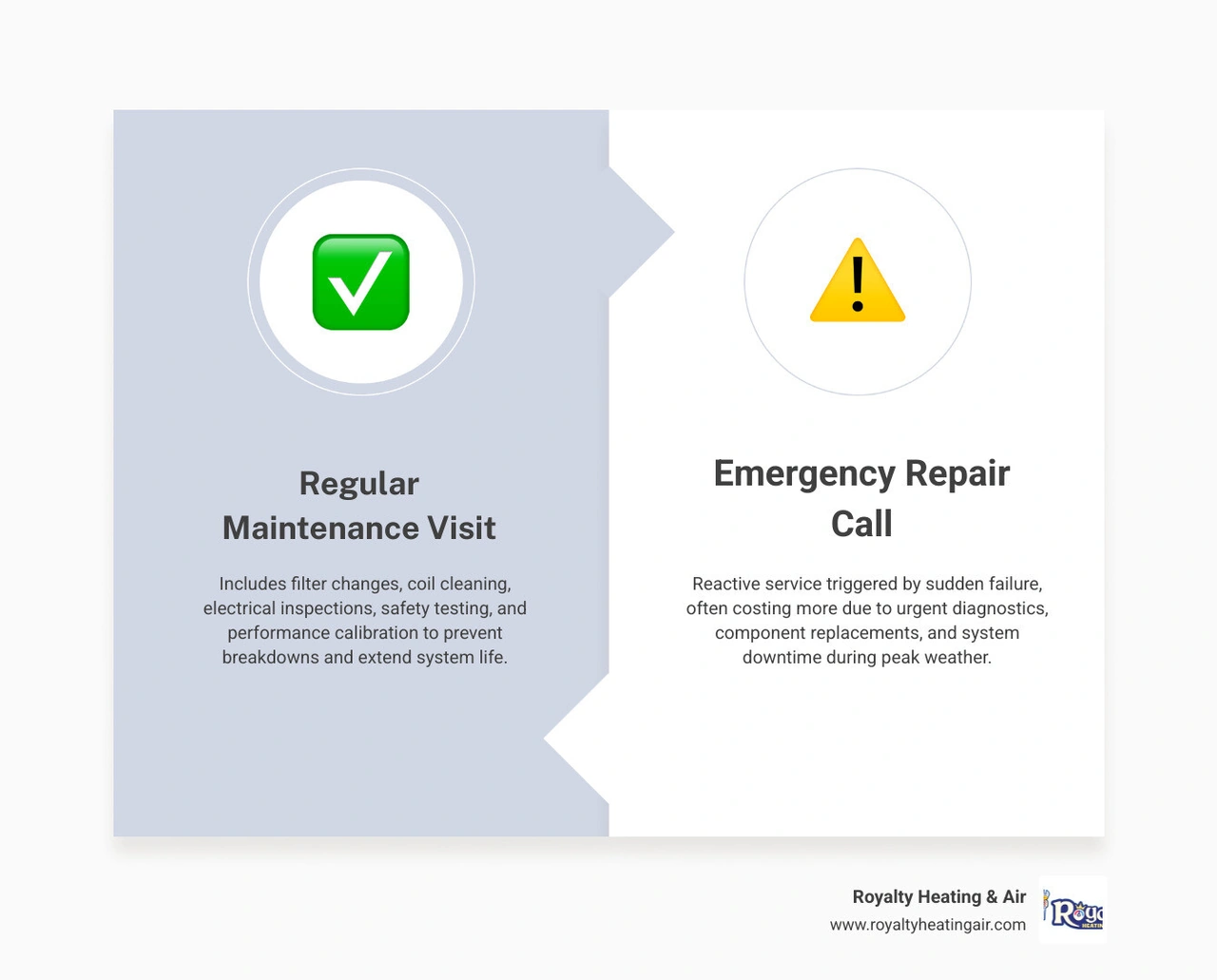
It is common for homeowners to confuse a routine maintenance visit with a repair call, but they serve entirely different purposes.
A maintenance visit is proactive. You schedule it when your system is working perfectly fine. The goal is to keep it that way. During a maintenance visit, the technician works through a standardized checklist to clean, adjust, and test the entire system, ensuring it continues to run safely and efficiently.
A repair call is reactive. You call us because your air conditioner is blowing warm air, your furnace won't turn on, or you hear a loud screeching noise from your attic. The technician's primary focus during a repair call is diagnostic—troubleshooting the specific component that has failed and presenting you with options to replace or repair that part to get your system back up and running.
While minor adjustments may be made during a maintenance visit, major parts replacements are typically handled as separate repair services. If you are experiencing heating issues in Lincoln, you can learn more about how we address these specific concerns in our Heating Maintenance Lincoln CA Guide.
While professional service twice a year is essential, your HVAC system needs a little bit of care from you between those visits. Think of this as the "daily flossing" that supports your biannual dentist cleanings. Taking care of a few simple, safe tasks can prevent major airflow restrictions and keep your system happy. For a complete breakdown of filter care, read our guide on How Often Should You Change Your HVAC Air Filter.
You don't need to be an HVAC expert to perform these basic preventative steps:
• Change Your Air Filters Regularly: This is the single most important thing you can do for your system. A dirty, clogged filter blocks airflow, forcing your blower motor to work twice as hard. Check your filter every 30 days. If you have pets or allergies, replace it every 1 to 2 months; for standard homes, every 3 months is usually sufficient.
• Maintain Outdoor Unit Clearance: Keep shrubs, weeds, and wild ivy trimmed back at least two feet away from your outdoor condenser unit. Your AC needs to breathe to dump heat; if it is choked by vegetation, it will run incredibly hot and inefficiently.
• Dust Your Return Grilles: Use a vacuum brush attachment or a damp microfiber cloth to clean dust off your return air vents and supply registers. This keeps dust from entering your system in the first place.
• Keep Vents Open: Ensure that furniture, heavy drapes, and rugs are not blocking your supply or return grilles. Closing off too many vents throws off the system's static pressure, which can damage your compressor.
To get the absolute most value out of your scheduled maintenance visit, a little bit of preparation goes a long way. Here is a quick checklist of how you can prepare before your technician arrives:
• Clear the Path: Make sure there is clear, unobstructed access to your indoor unit (whether it is in a closet, garage, basement, or attic) and your outdoor condenser. Move any storage boxes, bikes, or lawn equipment out of the way.
• Secure Your Pets: Technicians will be walking in and out of your home to check thermostats, indoor units, and outdoor systems. Keeping your pets in a secure room ensures they stay safe and don't slip out the door.
• Write Down Your Questions and Observations: Have you noticed any strange whistling noises lately? Does one bedroom always feel warmer than the rest of the house? Let your technician know! These clues help them look for specific issues during their inspection.
• Have Your Service History Ready: If you have records of past repairs or your system's original installation documents, keep them handy. This is especially helpful if it is our first time servicing your home.
For more valuable tips on managing your home comfort system, check out our guide on HVAC Maintenance Plans Tips Homeowners.
Not all maintenance plans are created equal. When evaluating service agreements or choosing an HVAC company in the Rocklin or Loomis area, keep your eyes open for these warning signs:
• The "In-and-Out" Special: If a technician finishes your "complete tune-up" in 15 or 20 minutes, they likely only did a visual check. Real maintenance takes time.
• High-Pressure Upselling: A trustworthy technician will explain their findings, show you the measurements (like a weak capacitor reading on a meter), and offer practical recommendations. If they use scare tactics to pressure you into buying accessories you don't need, look elsewhere.
• No Written Checklist or Report: You should always receive a detailed, written breakdown of exactly what was tested, cleaned, and measured during the visit. This documentation is vital for keeping your manufacturer's warranty valid.
We strongly recommend scheduling professional maintenance twice per year: once in the spring for your air conditioning system, and once in the fall for your heating system. If you have a heat pump system that handles both heating and cooling, it still needs to be serviced twice a year because it operates year-round to keep your home comfortable.
Yes, in many cases it will. Most major HVAC manufacturers (including Carrier, Trane, and Lennox) explicitly state in their warranty terms that the system must be professionally maintained on an annual basis. If a major part like your compressor fails and you cannot provide documented proof of regular professional service, the manufacturer may deny your warranty claim, leaving you to pay for the replacement out of pocket.
A thorough, professional maintenance visit for a single system typically takes between 60 and 90 minutes. If your home has multiple systems (for example, separate upstairs and downstairs units), you should expect the visit to take roughly two to three hours so the technician can meticulously test and clean every component of both systems.
At Royalty Heating & Air, we treat your home’s comfort system with the care and attention it deserves. Serving Roseville, Rocklin, Lincoln, Loomis, and Granite Bay, our team of highly trained, friendly professionals is dedicated to keeping your heating and cooling systems running at peak efficiency all year long.
Beyond delivering superior service, we are incredibly proud of our unique partnership with the MackAttack Foundation. Through this partnership, we proudly support foster babies and sponsor local family adoptions, meaning that every time you choose us to care for your home, you are directly helping us make a profound, life-changing difference in our local community.
Ready to protect your system from unexpected breakdowns, lower your monthly utility bills, and enjoy cleaner indoor air? Explore our comprehensive Maintenance Plans today and schedule your seasonal tune-up with our team!
